
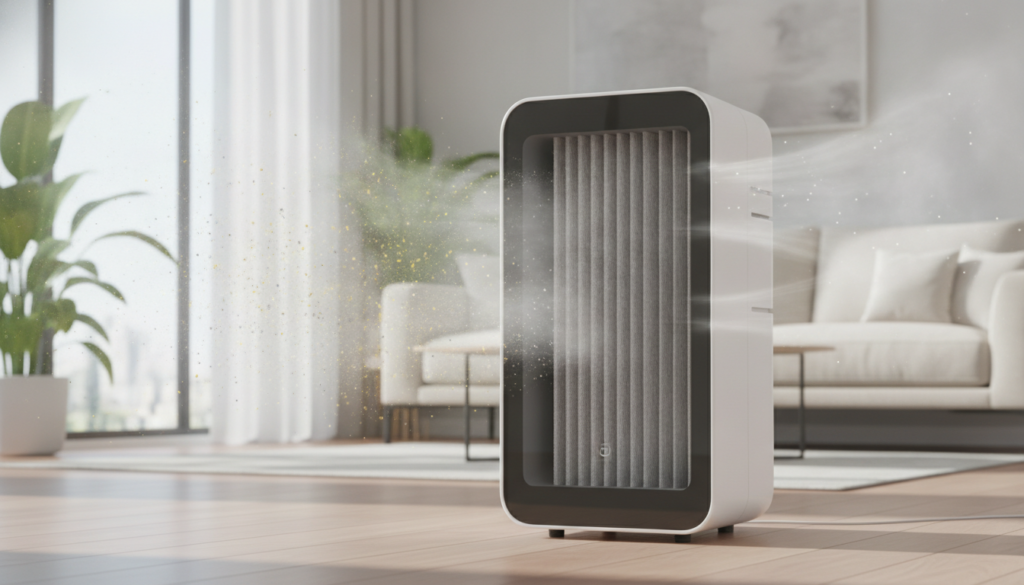

In a world increasingly conscious of well-being, the unseen quality of indoor air has emerged as a critical concern. As populations spend approximately 90 percent of their lives indoors, according to the U.S. Environmental Protection Agency, the air within homes and workplaces can harbor pollutant levels two to five times higher than those found outside. This invisible threat includes everything from common allergens like dust and pollen to fine particulate matter (PM2.5) from wildfire smoke, and even microscopic pathogens responsible for illnesses such as the flu, COVID, RSV, and the common cold. The promise of cleaner indoor environments often points towards advanced filtration systems, particularly those featuring HEPA technology. However, navigating the claims and understanding the genuine impact of these systems requires a methodical approach. This article aims to cut through the noise, demystifying the science behind HEPA filtration, exposing misleading marketing, and providing actionable insights into how these advanced filters genuinely transform indoor air quality for a healthier living space.
The Hidden Mechanics of Cleaner Air: Unpacking Filtration Stages
Every air purifier operates on a straightforward principle: a fan draws ambient air into the unit, pushes it through one or more filters, and then circulates purified air back into the room. This continuous cycle systematically reduces the concentration of airborne pollutants. The effectiveness of this process hinges significantly on the fan, which must be robust enough to ensure consistent airflow and prevent air from bypassing the filter edges, a common flaw in less efficient models.
As air moves through the device, it undergoes a series of critical stages. First, a pre-filter captures larger debris like pet hair, lint, and significant dust clumps, safeguarding the more delicate primary filter. Next, the primary filtration stage, often a True HEPA filter, targets fine particles such as allergens, mold spores, and bacteria. Finally, if present, an activated carbon layer addresses gaseous pollutants, odors, and chemical compounds, completing the purification cycle before clean air is released back into the environment.
Understanding How HEPA Filters Trap Contaminants
The term HEPA, which stands for “high efficiency particulate air,” refers to a filter designed to capture extremely small particles, adhering to strict U.S. Department of Energy standards. For a filter to earn this classification, it must effectively capture at least 99.97% of airborne particles measuring 0.3 microns in diameter. These particles represent a challenging target because they are considered the most penetrating particle size, meaning a filter proficient at this level can effectively trap both larger and smaller contaminants.
HEPA filters are constructed from a dense mat of fibers, typically fiberglass, which forms an intricate, maze-like structure. Particles are captured through three distinct mechanisms. First, interception occurs when particles following the airstream come into direct contact with the filter fibers and adhere to them. Second, impaction captures larger particles that cannot follow the air current around the fibers and instead collide directly with them due to their inertia. Lastly, diffusion is crucial for smaller particles, which move erratically within the airstream due to Brownian motion, increasing the probability they will strike a fiber and become permanently trapped.
Beyond the Label: Demystifying True HEPA and Other Filters
The marketplace for air purification can be a perplexing landscape, often muddled by ambiguous terminology. A critical distinction exists between “True HEPA” filters and those labeled as “HEPA-type” or “HEPA-like.” The latter designations often fail to meet the rigorous U.S. Department of Energy standards, offering significantly weaker filtration capabilities despite their deceptively similar names. A truly certified HEPA filter guarantees the removal of at least 99.97% of airborne particles as tiny as 0.3 microns, encompassing dust, pollen, pet dander, mold spores, bacteria, and a range of viruses.
Beyond the primary HEPA filter, two other filter types play pivotal roles in comprehensive air purification systems. Pre-filters, typically washable mesh screens, serve as the first line of defense. Their main function is to trap larger debris like pet hair and lint, preventing premature clogging of the more delicate and expensive HEPA filter. Regular cleaning of these pre-filters, ideally every two to four weeks, is a simple yet effective way to extend the lifespan of the main filtration components and maintain optimal airflow.
The Essential Role of Activated Carbon in Odor and VOC Reduction
While HEPA filters excel at trapping particulate matter, they do not effectively address gaseous pollutants. This is where activated carbon filters become indispensable. These specialized filters absorb volatile organic compounds (VOCs), various cooking odors, smoke fumes, and chemical compounds that off-gas from furniture, cleaning products, and building materials. Without an activated carbon layer, an air purifier, despite its HEPA efficiency, would leave these potentially harmful chemical compounds circulating in the air.
The absorption process within an activated carbon filter relies on its highly porous structure, which provides a vast surface area for gases to bind. However, unlike HEPA filters which physically trap particles, carbon filters saturate over time as they become filled with adsorbed gases. This saturation means they have a finite lifespan, often requiring more frequent replacement than HEPA filters, especially in environments with heavy smoke exposure, such as during wildfire events, or strong persistent odors. Neglecting to replace activated carbon filters means the unit will continue to circulate air with unaddressed chemical pollutants, diminishing the overall efficacy of the purification system.
Real-World Impact: Documented Health Benefits of Purified Air
The advantages of advanced air filtration extend far beyond merely reducing sneezing; they encompass a spectrum of measurable health improvements. For individuals grappling with allergies and asthma, the connection is direct and profound. True HEPA filtration systematically removes the common indoor triggers—pollen, dust mites, pet dander, and mold spores—that provoke immune responses. By significantly reducing the concentration of these particles in the breathing environment, individuals experience a marked decrease in the frequency and severity of their symptoms, often leading to a greater sense of well-being.
Furthermore, HEPA filters play a crucial role in safeguarding against pathogenic microorganisms. Their ability to capture illness-causing bacteria, viruses, and mold spores contributes to a healthier indoor environment, potentially reducing the spread of respiratory illnesses like the flu, COVID, and RSV. This becomes particularly relevant in the cooler months of 2026, as people continue to spend more time indoors, where pollutant levels naturally escalate.
Protecting Your Health: From Allergies to Cognitive Performance
Beyond respiratory health, emerging research has revealed surprising benefits. A notable 119-person study indicated that HEPA purifiers improved cognitive scores by 12% in adults over 40 after just one month of home use, with significant gains observed in mental flexibility and executive function. This suggests that the advantages of cleaner air permeate beyond lung performance, positively influencing brain health and daily cognitive function. Reducing airborne pollutant loads, including fine particulate matter from sources like vehicular exhaust and industrial activities, has been consistently linked to better overall health outcomes.
The protective role of air purifiers also gains heightened importance during environmental crises, such as wildfire events. Fine particulate matter (PM2.5) from wildfires is particularly damaging to lung tissue. Global studies have consistently demonstrated substantial health gains when indoor air purification is employed during periods of wildfire smoke exposure. In homes near wildfire zones, a high-quality air purifier with True HEPA filtration is not merely a comfort item; it is a vital protective measure, offering a crucial barrier against hazardous airborne contaminants. Moreover, reduced exposure to VOCs, often linked to long-term respiratory damage, further solidifies the role of comprehensive air filtration in fostering a truly healthy indoor ecosystem.
Making an Informed Choice: Selecting and Maintaining Your Air Purifier
Understanding how air purifiers function is merely the first step; applying that knowledge to make an informed purchase and maintain your unit is equally vital. The initial consideration should always be the room size. Air purifiers are rated for specific square footage, and choosing a unit too small for your space means it will run continuously without ever effectively cleaning the air to desired levels. Precisely measure your room and consider sizing up for a modest buffer to ensure optimal performance and air exchange rates.
When selecting a unit, prioritize True HEPA certification above all else; do not settle for ambiguous “HEPA-style” labels. Look for multi-stage filtration systems that include washable pre-filters, a certified True HEPA filter, and an activated carbon layer, as these consistently outperform single-filter units in comprehensively addressing both particulate and gaseous pollutants. Additionally, consider the noise levels, especially if the purifier will operate in a bedroom; units with noise levels between 10 to 30 decibels are ideal for continuous, unobtrusive use, and many models offer a quieter “sleep mode.”
Maximizing Effectiveness: A Guide to Air Purifier Maintenance
Modern air purifiers often come equipped with smart features such as air quality sensors, app connectivity, and automatic fan adjustments based on real-time air conditions. These are not merely conveniences but intelligent functionalities that enhance efficiency; a sensor-equipped unit that automatically increases fan speed when cooking odors arise or outdoor air quality deteriorates performs more consistently than a manually operated device. For portable room air cleaners, specifically, look for the AHAM Verifide mark, which assures independent laboratory testing confirms the product performs to manufacturer claims for its suggested room size.
However, even the most advanced purifier is only as good as its maintenance. Establishing a strict filter replacement schedule is paramount. It is recommended to mark the installation date directly on the filter. While True HEPA filters generally last 12 to 18 months, activated carbon filters may require attention every three to six months, and pre-filters need cleaning every few weeks. Skipping these replacements is the fastest way to render a high-quality purifier ineffective, as clogged filters not only cease to purify but can also restrict airflow and even push trapped particles back into the room. A clean filter is fundamental to achieving sustained air quality improvements.
Here are key takeaways for maximizing your indoor air quality:
- Prioritize units with True HEPA and activated carbon for comprehensive filtration against particles and gases.
- Match the air purifier’s Clean Air Delivery Rate (CADR) to your room’s square footage for optimal performance.
- Regularly clean pre-filters and adhere strictly to manufacturer-recommended replacement schedules for main filters to maintain efficiency.
- Consider smart features like air quality sensors and automatic fan adjustments for dynamic and efficient air cleaning.
- Be wary of misleading labels such as “HEPA-type” and always verify True HEPA certification.
How do air purifiers clean the air in a room?
Air purifiers operate by drawing indoor air through a fan system, pushing it through a series of specialized filters. These filters are designed to capture airborne particles and absorb gaseous pollutants, releasing cleaned air back into the room in a continuous cycle to reduce pollutant concentrations effectively.
Do HEPA filters remove dust?
Absolutely. True HEPA filters are engineered to trap microscopic particles as small as 0.3 microns, which covers the full range of dust particle sizes found in most homes, including dust mite debris and fine particulate matter.
What is the distinction between True HEPA and HEPA-like filters?
True HEPA filters adhere to stringent U.S. Department of Energy standards, guaranteeing they capture at least 99.97% of particles at 0.3 microns. In contrast, ‘HEPA-like’ or ‘HEPA-type’ filters lack this certification and often provide significantly inferior filtration performance, misleading consumers into believing they offer similar protection.
How frequently should air purifier filters be replaced?
Maintenance varies by filter type: washable pre-filters should be cleaned every two to four weeks. Activated carbon filters generally require replacement every three to six months, while True HEPA filters typically last between 12 to 18 months, depending on usage and prevailing air quality conditions.
Can an air purifier genuinely alleviate allergy symptoms?
Yes, both scientific research and clinical recommendations confirm the efficacy of air purifiers for allergy relief. By systematically removing common airborne allergens such as pollen, pet dander, and mold spores from your indoor environment, purifiers directly reduce the immune system’s exposure to triggers, thereby lessening allergic responses and symptoms.

