
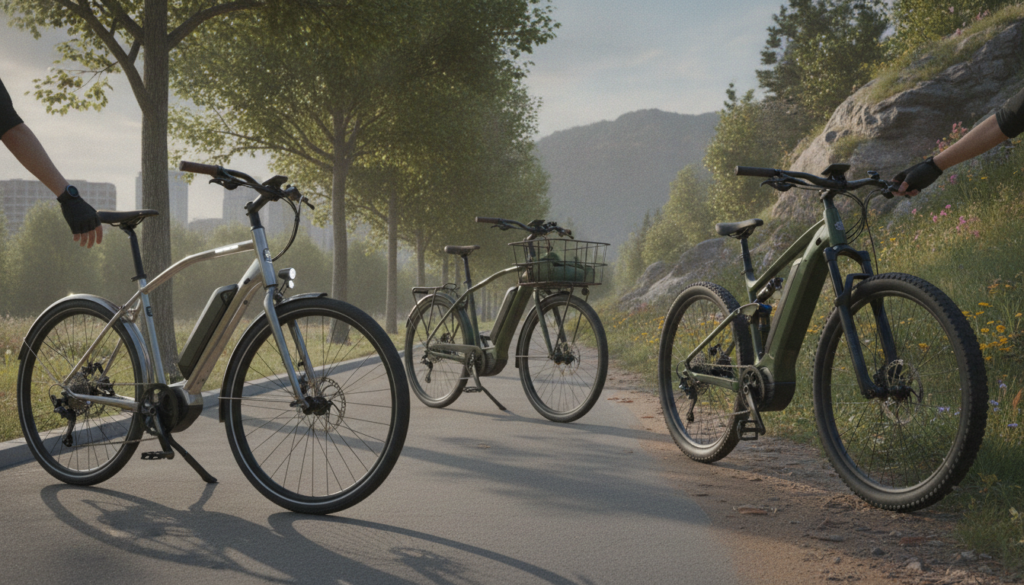

The quest for the perfect electric bike can feel like navigating a complex maze. With a burgeoning market offering a dizzying array of models, features, and price points, discerning the ideal ride for your daily commute or adventurous escapades requires more than just a glance at a spec sheet. Many riders find themselves overwhelmed by the sheer volume of choices, often leading to decisions based on marketing hype rather than practical suitability, which can ultimately result in buyer’s remorse and a neglected machine. This guide is crafted to cut through the noise, offering a methodical, real-world perspective on selecting an e-bike that genuinely aligns with your lifestyle, terrain, and long-term aspirations, ensuring you make a confident choice that you will appreciate for years to come.
Understanding the Different Types of Electric Bikes
Electric bikes are not a monolithic category; they encompass a variety of designs, each optimized for specific purposes. Identifying your primary use case is the first crucial step in narrowing down your options. For the vast majority of riders, a commuter e-bike represents the most practical and versatile choice.
Commuter e-bikes, designed for daily travel ranging from 5 to 25 miles, are excellent car replacements for urban environments and areas with moderate hills. They typically feature an upright riding position for comfort, integrated lights for safety, and racks and fenders for practicality, ensuring stability at speed. However, they are generally not suited for aggressive off-road trails or for those seeking an ultra-lightweight option.
For thrill-seekers, electric mountain bikes (eMTBs) are engineered for trail riding, steep climbs, and technical terrain, almost exclusively utilizing high-performance mid-drive systems from brands like Bosch, Shimano, or Yamaha. While incredibly capable, they demand more maintenance and are considerably more expensive, making them unsuitable for pavement-only riders.
Folding e-bikes offer unparalleled portability, making them ideal for individuals in small apartments, RV travelers, or those who combine cycling with public transport. Their compact nature, however, often comes with a trade-off in stability at higher speeds due to smaller wheels. Lastly, cargo e-bikes are indispensable for families, school runs, or significant grocery hauling. For these heavy-duty applications, a powerful mid-drive motor paired with a large 750Wh+ battery is essential to handle the additional weight effectively.
Decoding E-Bike Motors: Mid-Drive Versus Hub
The motor type represents perhaps the most critical decision in your e-bike selection process, profoundly influencing ride feel, efficiency, and hill-climbing capabilities. Electric bikes primarily come with one of two motor types: mid-drive or hub.
Mid-drive motors are centrally located at the crank, integrating with the bike’s drivetrain. This strategic placement allows them to leverage the bike’s gears, providing excellent hill-climbing power and high efficiency, resulting in a natural, balanced ride feel. However, this integration means higher wear on the drivetrain components like chains and cassettes. In contrast, hub motors are typically situated in the rear wheel, offering a straightforward, ‘push’ sensation. They are generally more budget-friendly and require less drivetrain maintenance, making them suitable for flat city riding. Yet, their efficiency and hill-climbing performance are moderate compared to mid-drive systems.
When evaluating motor performance, it is crucial to understand that torque (measured in Newton-meters, Nm) often matters more than watts, especially for tackling inclines. Watts indicate power output, while torque measures rotational force—the grunt that propels you up a hill. For flat city riding, 40-50 Nm is sufficient; moderate hills call for 60-70 Nm; and for steep hills or cargo hauling, 85+ Nm is recommended. A 250W mid-drive motor with 85 Nm of torque can surprisingly outperform a 750W hub motor on significant climbs, illustrating why focusing on torque is a methodical approach to choosing a capable e-bike. If your riding environment includes hills, a mid-drive system is undoubtedly the superior long-term investment, even if your initial budget suggests a hub motor.
Powering Your Ride: Battery Capacity and Real-World Range
The battery is the heart of your electric bike, dictating how far you can travel on a single charge. Its capacity is measured in Watt-hours (Wh), which can be conceptualized as the size of your e-bike’s fuel tank. While manufacturers often quote optimistic range figures, real-world performance is typically 20-40% lower due to various factors.
A 400Wh battery might offer 30-40 miles in eco mode, but this drops to 20-30 miles in mixed use and 15-20 miles with high assist. Stepping up to a 500Wh battery extends this to 40-55 miles (eco), 30-45 miles (mixed), and 20-30 miles (high assist). For more extensive rides, a 625Wh unit can provide 50-70 miles (eco), 40-60 miles (mixed), and 30-40 miles (high assist). The largest common option, a 750Wh battery, can push range to 60-85 miles (eco), 50-75 miles (mixed), and 35-50 miles (high assist).
Several variables significantly impact actual range. Rider weight, hilly terrain, and cold weather can reduce battery performance by up to 20%. Underinflated tires also increase rolling resistance, draining power more quickly, while consistently riding on a high assist level will naturally deplete the battery faster. Therefore, it is wise to factor in these real-world conditions when evaluating a bike’s stated range and selecting a battery size that offers a comfortable buffer for your intended use.
Prioritizing Safety: Essential Battery Certifications for 2026
As electric bikes become more prevalent, battery safety has evolved from a secondary concern to an absolute necessity. In 2026, it is no longer acceptable to overlook critical safety certifications when purchasing an e-bike, especially given the increased awareness of fire risks associated with uncertified batteries.
Consumers must actively seek out e-bikes that boast UL 2849 certification, which signifies that the entire electrical system of the bicycle meets stringent safety standards. Equally important is UL 2271 certification for the battery pack itself. These certifications are not merely labels; they are indicators that the product has undergone rigorous testing for electrical, mechanical, and environmental safety hazards. Purchasing e-bikes or replacement batteries without these verified certifications can expose riders to increased risks of overheating, short circuits, and fire. When considering online-only brands, it is particularly vital to verify their certification status directly from the manufacturer or through reputable third-party review sites to ensure peace of mind and protection.
Navigating E-Bike Speed Classes and Local Regulations
Understanding electric bike speed classes is essential for both legal compliance and choosing a model appropriate for your riding environment. These classifications define the maximum assisted speed and the presence of a throttle, varying by region.
In the United States, e-bikes are typically categorized into three classes: Class 1 provides pedal-assist up to 20 mph with no throttle; Class 2 offers pedal-assist up to 20 mph and includes a throttle for propulsion without pedaling; and Class 3 features pedal-assist up to 28 mph, also without a throttle. In contrast, the European Union standard limits e-bikes to 25 km/h (approximately 15.5 mph) and prohibits throttles, emphasizing pedal-assisted movement. The implications of these classifications are significant for where you can legally ride. For instance, Class 3 bikes, with their higher speeds, may face restrictions on certain bike paths or trails that are open to lower-class e-bikes or traditional bicycles. Always consult local regulations before purchasing to ensure your chosen e-bike can be legally operated in your intended areas. Understanding the nuances of electric vehicle safety, whether for two wheels or four, is crucial for all riders.
Understanding the nuances of electric vehicle safety, whether for two wheels or four, is crucial for all riders.
Beyond the Specs: Crucial Hidden Factors for Your E-Bike Choice
While motor and battery specifications are foundational, several often-overlooked factors can dramatically influence your e-bike experience. A methodical evaluation of these hidden elements will ensure greater satisfaction and long-term usability.
Consider the sensor type: a torque sensor provides a natural, intuitive pedal feel by measuring your pedaling effort and adjusting assistance accordingly, creating a seamless extension of your own power. A cadence sensor, on the other hand, simply detects if you are pedaling and provides a more abrupt, on/off boost. For a truly enjoyable ride, a torque sensor is highly recommended. Given that e-bikes are inherently heavier than traditional bicycles, typically weighing between 45 and 70 pounds, hydraulic disc brakes are not merely an upgrade but a strong recommendation for reliable stopping power and enhanced safety. The overall weight of the bike also becomes critical if you frequently need to carry it up stairs or load it onto a rack. Furthermore, a removable battery is an indispensable feature for apartment dwellers or those who need to charge their battery inside an office, offering convenience and a deterrent against theft.
Lastly, frame type plays a role in comfort and accessibility. Step-through frames, characterized by a lower top tube, facilitate easier mounting and dismounting, which is particularly beneficial for riders with mobility concerns or those carrying cargo. Step-over frames, while slightly stiffer, offer a more traditional bicycle aesthetic. Ultimately, the choice should prioritize your comfort and ease of use over mere image.
- Torque Sensor (for natural pedal feel)
- Hydraulic Disc Brakes (for superior stopping power)
- Manageable Weight (if regular lifting is required)
- Removable Battery (for charging flexibility and security)
- Appropriate Frame Type (Step-through for ease, Step-over for traditional feel)
The True Cost of E-Bike Ownership: What to Expect in 2026
The initial purchase price of an electric bike is only part of the financial equation. Understanding the long-term ownership costs is crucial for a realistic budget and avoiding unexpected expenses. Unlike traditional bicycles, e-bikes, especially those with mid-drive motors, can incur specific maintenance costs.
Mid-drive systems, while efficient, place more stress on the drivetrain, leading to faster wear on components such as chains. A typical chain replacement might cost between $30-$60 annually. Brake pads, another wear-and-tear item, usually require replacement every year or two, costing around $20-$50. Annual tune-ups, essential for keeping your e-bike running smoothly, generally range from $80-$150. These are standard maintenance expenses that should be factored into your yearly budget.
The most significant long-term cost, however, is battery replacement. E-bike batteries typically last 3-5 years or for 500-1,000 charge cycles, depending on usage and care. Replacing a battery can cost anywhere from $500-$900 or more, depending on its capacity and brand. This substantial cost needs to be considered over the lifespan of the e-bike, as it can significantly impact the overall value proposition. Choosing a reputable brand with accessible replacement parts and certified batteries can mitigate some of these long-term financial considerations.
Making Your Decision: A 2026 Price Guide and Buyer’s Shortcut
The electric bike market in 2026 presents a broad spectrum of prices, each tier offering different levels of performance, features, and durability. Navigating this landscape requires an understanding of what to expect at various investment levels.
Entry-level e-bikes, typically priced between $700 and $1,200, generally feature basic hub motors and mechanical brakes, suitable for very light, flat urban use. Moving up to the $1,200-$2,000 range, you can expect solid commuter options with improved components, including hydraulic brakes, which are a significant safety upgrade. The sweet spot for many riders in 2026 falls within the $1,800-$2,800 bracket, offering a robust balance of a reliable mid-drive motor, a 500-750Wh battery, and enhanced long-term durability, providing excellent value.
For premium systems with full suspension and advanced features, prices climb above $3,500. To simplify your decision, consider these shortcuts: if your commute is 10-20 miles, a 500Wh battery is generally sufficient. If your area has hills, a mid-drive motor is a non-negotiable choice. For carrying children or heavy groceries, a cargo e-bike with a 750Wh+ battery is necessary. Apartment dwellers will find a removable battery mandatory for convenient charging and security. And if the lowest possible price is your primary concern, a hub motor commuter will be the most affordable, though it may compromise on long-term performance and versatility. Delving deeper into motor technologies can clarify the best choice for your terrain.
Delving deeper into motor technologies can clarify the best choice for your terrain.
Who Should Buy an E-Bike? Who Should Not Buy?
The rise of the electric bike has opened up cycling to a broader audience, offering distinct advantages for many, but they are not a universal solution for every rider. Identifying whether an e-bike aligns with your needs is critical.
E-bikes are an excellent investment for daily commuters looking to shorten travel times, flatten hills, and reduce reliance on cars for short to medium distances. They are also highly beneficial for riders with knee sensitivity or those seeking to extend their cycling range and keep pace with faster friends during group rides, as the adjustable effort allows for tailored fitness routines. Residents in hilly neighborhoods will find the motor assistance invaluable for effortlessly tackling inclines. Conversely, ultra-light road cycling purists who prioritize minimal weight and pure human power, or competitive racers, will likely find e-bikes too heavy and counter to their sport’s ethos. Individuals expecting the instant acceleration of a motorcycle may be disappointed by the pedal-assist nature of most e-bikes. Lastly, anyone without secure storage options for a valuable and often heavy machine should reconsider, as theft can be a significant concern.
Final Expert Verdict
In 2026, the best electric bike is not defined by raw power or the highest speed rating, but by its seamless integration into your life. The most effective choice is the one meticulously matched to your unique terrain, typical riding distances, and practical storage realities. For the majority of riders seeking a balanced and reliable experience, a methodical approach points towards a mid-drive system paired with a 500-750Wh battery. The addition of hydraulic brakes for superior stopping power and a torque sensor for a natural, responsive ride feel enhances both safety and enjoyment. Aiming for an e-bike weighing around 55-65 pounds offers a practical balance between robustness and maneuverability.
Choosing practicality over aggressive marketing numbers will undoubtedly lead to greater satisfaction and a bike you genuinely enjoy riding. When your e-bike truly fits your needs, it transforms from a purchase into a lifestyle change, reliably replacing car trips and opening up new possibilities for adventure and daily convenience. This thoughtful selection process ensures that your investment not only meets but exceeds expectations, encouraging more frequent rides and a lasting appreciation for your two-wheeled companion.
How many miles does an electric bike go on one charge?
Most e-bikes typically offer a range of 30-70 miles on a single charge, influenced significantly by battery size, the terrain you’re riding on, and the level of pedal assist you utilize.
Is 500Wh enough for commuting?
Yes, for daily commuting distances of 10-20 miles, a 500Wh battery is generally sufficient to provide reliable assistance throughout your journey.
Is 750W better than 250W?
Not necessarily. While wattage indicates power output, torque and the specific design of the motor (such as mid-drive versus hub) often matter more, especially when it comes to effective hill climbing and overall ride feel.
How long do e-bike batteries last?
E-bike batteries typically have a lifespan of 3-5 years or approximately 500-1,000 charge cycles, depending on usage patterns and proper maintenance.
Are electric bikes worth it in 2026?
For individuals looking to commute regularly, replace short car trips, or enjoy cycling with reduced effort, electric bikes offer significant value. However, for occasional, very short rides, the investment might not be as justified.

