
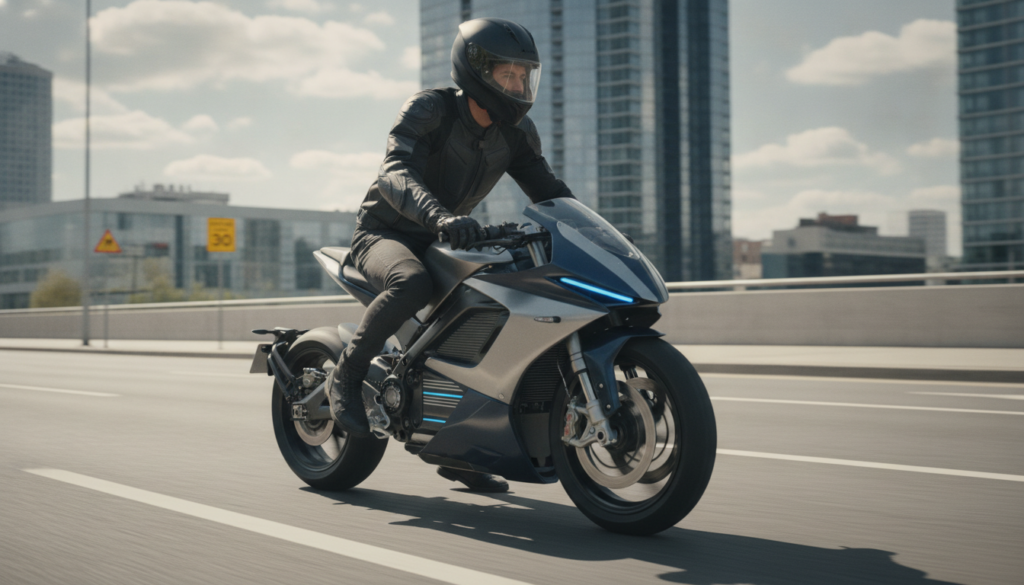

The allure of electric motorcycles is undeniable, drawing in a new wave of riders with promises of silent power and simplified mechanics. Yet, for many beginners, the notion of a “fast” electric motorcycle can spark apprehension. Is the exhilaration of instant torque inherently at odds with a novice’s need for safety and control? The rapid evolution of electric vehicle technology has blurred the lines between high-performance machines and accessible entry-level options, creating a landscape where discerning the right choice is paramount. New riders often find themselves weighing the excitement of speed against the critical demand for a forgiving learning experience.
Navigating this evolving market requires a nuanced understanding beyond mere horsepower or top speed. It delves into how intelligent engineering can transform potentially swift electric bikes into remarkably safe platforms for building foundational riding skills. The shift from traditional clutch-and-gear systems to intuitive single-speed drivetrains fundamentally redefines the learning curve, allowing aspiring motorcyclists to focus on balance and throttle modulation without the added complexities. This guide aims to demystify the perceived dangers of “fast” electric motorcycles, illuminating the design principles and practical considerations that empower beginners to embark on their two-wheeled journey with confidence and security.
Understanding the allure: Why electric motorcycles are a game-changer for new riders
Electric motorcycles have rapidly transitioned from a niche curiosity to a mainstream option, particularly appealing to those just entering the world of two-wheeled travel. Traditional gasoline-powered bikes often present a steep learning curve, demanding simultaneous mastery of clutch operation, gear shifting, and throttle control. This multi-faceted coordination can be overwhelming, frequently leading to stalled engines and a frustrating initial experience for many aspiring riders.
By contrast, electric motorcycles streamline this process dramatically. Most models feature a single-speed drivetrain, liberating beginners from the intricate dance of gear changes. This simplification allows new riders to dedicate their full attention to core competencies such as maintaining balance, modulating throttle input, and developing acute awareness of their surroundings. The result is a significantly shortened learning period and a much faster path to building essential riding confidence. Moreover, the characteristic quietness of electric motors reduces intimidation, creating a more peaceful environment for concentrated practice.
Simplifying the ride: How electric drivetrains empower novices
The absence of a clutch and manual gears is perhaps the most profound advantage electric motorcycles offer to beginners. This singular feature transforms the rider’s mental workload, allowing them to concentrate entirely on foundational skills like body positioning, braking techniques, and understanding terrain. The smooth, predictable power delivery of electric motors, free from the abrupt surges sometimes found in gasoline engines, further contributes to a less stressful and more controlled learning environment.
This inherent simplicity fosters a quicker development of muscle memory and intuitive handling. Riders can fine-tune their throttle control without the risk of mis-shifts or engine stalls, leading to a more fluid and enjoyable experience right from the start. For younger riders or adults discovering motorcycling later in life, this ease of operation often makes electric bikes far less daunting than their conventional counterparts, opening up the riding world to a broader demographic.
Demystifying speed: What makes an electric motorcycle truly safe for novices?
The term “fast electric motorcycles” often conjures images of powerful machines best left to experienced hands, naturally raising safety concerns for beginners. However, the true measure of a beginner-friendly electric motorcycle isn’t its maximum speed potential, but rather the controllability of its power delivery. Modern electric bikes are engineered with sophisticated throttle mapping and software that can regulate how aggressively power is applied, ensuring a predictable and manageable response to rider input.
Unlike some high-performance gasoline bikes with sudden power bands, electric motors can be tuned to offer a linear and smooth acceleration curve, ideal for learning. This means that while a motor might *capable* of high speeds, its initial responsiveness and mid-range torque can be optimized for gentle progression. Safety for novices isn’t about avoiding speed altogether, but rather about the rider’s ability to confidently command that speed. Thoughtful design prioritizes predictability and control over raw, untamed power, making certain “fast” electric motorcycles surprisingly safe for new enthusiasts.
Controllable power delivery: The electric advantage for learning
The immediate and abundant torque of electric motors is one of their defining characteristics. For a beginner, this might sound intimidating, but it is precisely this attribute that can be harnessed for safety. Electric powertrains allow for precise electronic control over how much power is delivered at any given moment, enabling manufacturers to implement beginner-friendly modes or throttle profiles. This ensures that even bikes with substantial power reserves can be ridden with gentle, easily manageable acceleration, preventing unexpected surges that could unsettle a new rider.
This nuanced control over power stands in stark contrast to the often less predictable nature of combustion engines, where power delivery can be influenced by engine RPMs and gear selection. On an electric motorcycle, a beginner can learn to modulate the throttle with confidence, knowing the bike will respond smoothly and proportionately. This focus on predictable behavior fosters quicker skill development and a greater sense of mastery for those taking their first turns on two wheels.
Key design elements for a confident first ride
Choosing an electric motorcycle for a beginner goes beyond aesthetics; it involves scrutinizing several critical design elements that directly impact safety and the learning experience. Paramount among these is manageable power. While the allure of high performance is strong, an entry-level bike should offer predictable, controllable torque rather than overwhelming acceleration. This allows new riders to build their confidence without fear of an unruly machine.
Equally important is a lightweight design. Lighter bikes are inherently easier to balance at low speeds, simpler to maneuver, and less intimidating to recover if a small mistake leads to a tip-over. A quality suspension system is also non-negotiable, particularly as beginners often explore varied terrain, from paved paths to gentle dirt trails. Effective suspension absorbs bumps and maintains tire contact, providing crucial stability that allows riders to focus on technique rather than fighting the road. Furthermore, reliable battery range ensures extended practice sessions without the anxiety of constant recharging, fostering uninterrupted skill development.
Prioritizing durability and ease of handling
New riders will inevitably encounter minor mishaps during their learning phase, making durable construction a vital feature. Robust frames, resilient components, and quality tires can withstand the inevitable drops and bumps, ensuring the bike remains reliable throughout the learning process. Ergonomics, including seat height and handlebar reach, are also crucial; a bike that allows a beginner to comfortably plant their feet on the ground at a stop significantly boosts confidence and control.
Advanced braking systems, such as Anti-lock Braking System (ABS) and regenerative braking, further enhance safety by preventing wheel lock-up and contributing to smoother deceleration. These features provide an additional layer of security, allowing beginners to focus on mastering fundamental riding skills. To aid in making an informed decision, here is a practical checklist:
- Manageable Power Output: Prioritize smooth, controllable acceleration over raw speed.
- Lightweight Chassis: Ensures easier balance, maneuverability, and recovery from minor falls.
- Quality Suspension: Essential for stability and comfort on diverse riding surfaces.
- Adequate Battery Range: Allows for longer practice sessions and reduces range anxiety.
- Durable Construction: Withstands the rigors of learning and occasional drops.
- Effective Braking System: Look for hydraulic disc brakes, ideally with ABS for enhanced safety.
- Ergonomic Comfort: Ensure a comfortable seat height and riding position for confident foot placement.
Navigating the market: Choosing the right electric motorcycle for your start
The electric motorcycle market in 2026 presents a diverse array of options, making it crucial for beginners to understand the nuances of different categories and price points. Electric dirt bikes, for instance, are often considered the most beginner-friendly. Their lightweight construction, robust suspension, and design for varied terrain make them forgiving and ideal for learning away from traffic. Alternatively, electric street motorcycles are typically heavier and geared for commuting, which can introduce additional challenges for new riders due to the complexities of urban environments.
A burgeoning category, hybrid trail bikes, offer a compelling blend of off-road durability and street versatility, appealing to those seeking a single bike for multiple uses. Budget considerations also play a significant role, with entry-level models generally falling into categories ranging from under $2,000 for basic options to over $3,000 for bikes with more advanced features and higher performance. Many beginners tend to focus solely on top speed or battery life, overlooking critical factors like bike weight, suspension quality, and overall build durability, which are far more impactful on the learning experience.
Spotlight on beginner-friendly models for 2026
Among the newer entries designed with novices in mind, the HiKNiGHT GTX1 electric dirt bike has garnered attention for its thoughtful balance of performance and accessibility. Instead of prioritizing extreme velocity, the GTX1 emphasizes stable frame geometry, responsive yet manageable acceleration, and a suspension system specifically tuned for trail riding. Its fat tires further enhance traction and stability, offering a comfortable and confidence-inspiring platform for initial explorations into electric motorcycling. More detailed insights into its design philosophy are often available on the HiKNiGHT official website.
Other notable mentions in the beginner segment include models like the Zero FXE, known for its agile handling, or the Vespa Elettrica, which provides a scooter-like experience for urban new riders. While the Harley-Davidson LiveWire and Energica Eva EsseEsse9 offer exhilarating performance, they are often considered for riders who have already developed a foundational skill set. The Cake Kalk& is another excellent option for those specifically eyeing lightweight off-road adventures, proving that tailored design makes all the difference for a safe and enjoyable introduction to electric motorcycling.
Building skills: The simplified learning curve with electric power
The shift to electric motorcycles fundamentally alters the learning experience, accelerating a beginner’s path to proficiency. By eliminating the complexities of clutch and gear shifting, electric bikes free riders to concentrate entirely on the core tenets of motorcycling. This means more focused attention can be directed towards developing proper body positioning, understanding precise throttle control, honing terrain awareness, and mastering the delicate art of balance and stability. This streamlined approach minimizes distractions, allowing for faster assimilation of fundamental skills.
The psychological benefit of a less intimidating learning environment cannot be overstated. Without the constant threat of stalling or fumbling gears, new riders feel less pressured and more confident to experiment and push their boundaries within safe limits. This enhanced confidence naturally translates into a quicker acquisition of intuitive control, making the journey from novice to competent rider a more fluid and rewarding process. Electric motorcycles foster a proactive learning environment where progress feels tangible and sustained.
Mastering fundamentals without the gear-shifting hurdle
The ability to focus exclusively on throttle management and balance fundamentally reshapes how beginners develop essential riding intuition. On an electric motorcycle, the primary interaction is between the rider’s hand on the throttle and the bike’s immediate, predictable response. This direct connection simplifies the cause-and-effect of speed and momentum, allowing for a more profound understanding of the bike’s dynamics without the interference of mechanical complexities.
This concentrated practice of core skills leads to faster development of muscle memory for crucial maneuvers, such as slow-speed turns, emergency braking, and navigating obstacles. Riders learn to anticipate the bike’s reactions more accurately, building a solid foundation that can then be applied to more advanced riding scenarios. The learning curve becomes a climb of skill rather than a battle with mechanical systems, making the initial phases of motorcycling significantly more accessible and enjoyable for everyone.
Beyond the purchase: Training, maintenance, and community for new riders
Acquiring a beginner-friendly electric motorcycle is merely the first step; sustained safety and enjoyment require ongoing commitment to training, proper maintenance, and engaging with the wider riding community. Formal motorcycle safety courses are invaluable, often offering specific modules or advice tailored to electric bikes. These programs cover essential skills like emergency braking, hazard perception, and defensive riding, all crucial for navigating diverse road conditions with confidence. Understanding the unique characteristics of electric powertrains, such as regenerative braking, is also a key component of these courses.
Electric motorcycles famously boast lower maintenance requirements compared to their gasoline counterparts. However, critical components still demand attention. Regular checks of tire pressure and wear, brake functionality, and the overall electrical system are essential. Crucially, battery health is paramount; adherence to charging guidelines and monitoring battery performance will ensure longevity and optimal range. For new riders, joining local electric motorcycle clubs or online forums offers a wealth of shared experience and practical tips, fostering camaraderie and a sense of belonging in the rapidly expanding electric riding scene. The future of electric motorcycling, with advancements in battery technology and charging infrastructure, promises an even more integrated and accessible riding experience.
Fostering confidence through continuous learning and support
The journey of becoming a proficient motorcyclist is continuous, and electric bikes offer a stable platform for this evolution. Leveraging available resources, from manufacturer-provided tutorials to community-led group rides, enhances both skill and confidence. As charging infrastructure expands and smart technologies integrate further into bike design, new riders will find even greater convenience and security. The methodical approach to learning facilitated by electric motorcycles, combined with a supportive ecosystem, ensures that beginners can confidently embrace the excitement of riding and contribute to a more sustainable future on two wheels.
What should I consider when choosing an electric motorcycle for beginners?
For beginners, prioritize manageable power output for smooth acceleration, a lightweight design for easier handling, quality suspension for stability, and reliable battery range for extended practice. Also, ensure the ergonomics, like seat height, allow for comfortable foot placement.
Are electric motorcycles safe for beginners?
Yes, electric motorcycles can be very safe for beginners, especially those designed with features like predictable throttle control, balanced weight distribution, and advanced braking systems. The absence of a clutch and gears simplifies the learning process, allowing novices to focus on core riding skills. Always wear appropriate safety gear and consider taking a motorcycle safety course.
How far can I expect to travel on a single charge with a beginner-friendly electric motorcycle?
The range varies significantly by model and battery capacity, but many beginner-friendly electric motorcycles typically offer between 40 to 90 miles on a single charge. This is often sufficient for urban commuting and extended practice sessions. Factors like riding style, terrain, and weather can influence the actual distance.
What maintenance do electric motorcycles require?
Electric motorcycles generally require less maintenance than gas-powered bikes due to fewer moving parts. Key maintenance tasks include regularly checking tire pressure, inspecting brakes and lights, and properly caring for the battery. Routine checks of the electrical system are also recommended to ensure optimal performance and longevity.
Can I ride an electric motorcycle with a regular motorcycle license?
Licensing requirements for electric motorcycles vary by state or country. In many jurisdictions, a regular motorcycle license is sufficient if the electric bike meets specific power and speed regulations. It’s crucial for beginners to check with their local authorities to ensure compliance with all legal requirements.

