
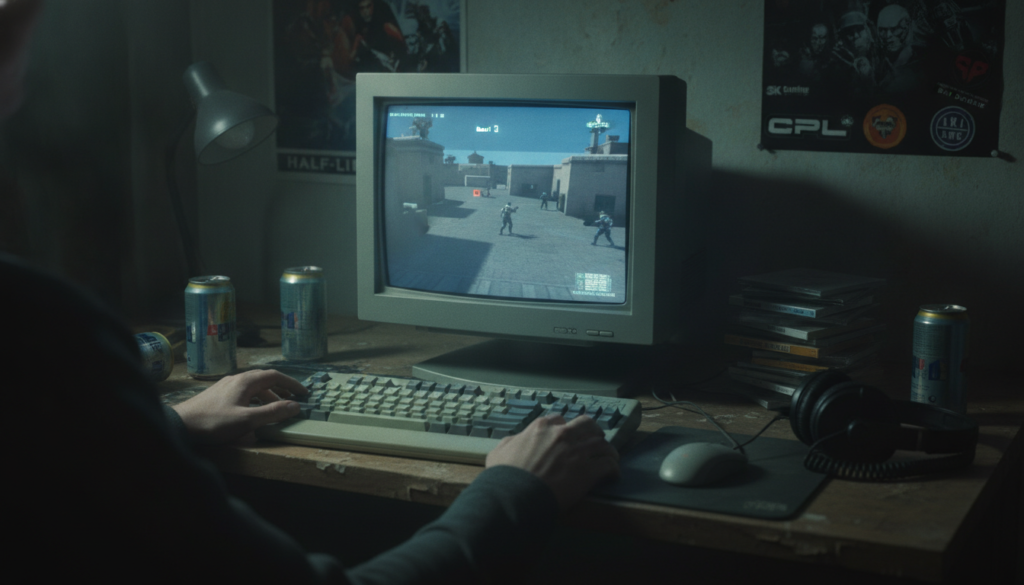

In the dynamic landscape of modern gaming, where titles emerge and fade with dizzying speed, a quarter-century-old behemoth continues to hold its ground, defying technological advancements and changing player preferences. Counter-Strike 1.6, a game released in an era predating widespread high-speed internet and sophisticated graphics engines, persists as a cultural touchstone and an active battlefield for thousands. Its longevity isn’t merely a quirk of nostalgia; it speaks to a profound impact on competitive gaming, a testament to minimalist design, and the enduring power of a dedicated community. This enduring classic, often overshadowed by its flashier successors like Counter-Strike: Global Offensive and Counter-Strike 2, still draws players back to its raw, skill-based engagements, proving that some legacies are simply unbreakable.
As 2026 unfolds, the paradox of CS 1.6’s sustained relevance prompts a deeper inquiry into what makes a game truly timeless. Is it the pure gunplay, free from the complexities of modern battle passes and cosmetic oversaturation? Is it the deep-rooted community that has fostered its survival through countless updates and rival releases? Or perhaps it’s the foundational role it played in shaping the very definition of esports, laying down blueprints for competitive integrity and spectator engagement that resonate to this day? Understanding the enduring appeal of Counter-Strike 1.6 requires a journey back to its core design principles, an exploration of its historical footprint, and an appreciation for the collective effort that keeps its digital heart beating.
The Enduring Core of Counter-Strike 1.6’s Design
At the heart of Counter-Strike 1.6’s unbreakable legacy lies its masterful design, characterized by simplicity, balance, and a relentless focus on player skill. Unlike many modern shooters that introduce complex mechanics, diverse character abilities, or constant meta shifts, CS 1.6 remains a purist’s dream. Its core gameplay loop—terrorists attempting to plant a bomb or counter-terrorists striving to prevent it or rescue hostages—is elegantly straightforward, yet it unlocks layers of tactical depth that continue to challenge players. The game provides a canvas where individual prowess and coordinated team strategy intertwine, creating a competitive environment driven by pure merit.
The Purity of Skill-Based Mechanics
Counter-Strike 1.6’s weapon handling, movement, and hit registration established a gold standard for competitive shooters. Every weapon in its arsenal possesses distinct, predictable recoil patterns that demand practice and muscle memory to master, rather than relying on random bullet spread or aim-assist. The movement system, while simple, allows for precise positioning and peeking, rewarding players who understand its nuances. This absence of extraneous features means that success hinges almost entirely on a player’s aim, map knowledge, communication, and strategic foresight. It cultivates a high skill ceiling, where the best players demonstrate consistent, refined technique rather than adapting to ever-changing gimmicks.
Iconic Maps and Timeless Gameplay Loops
The strategic depth found within CS 1.6’s iconic maps, such as Dust2, Inferno, and Nuke, contributes significantly to its lasting appeal. These maps are not merely backdrops for combat; they are meticulously crafted arenas designed to foster intricate tactical engagements. Each corner, choke point, and bomb site demands specific strategies, rotations, and counter-strategies. The defined objectives of bomb planting and hostage rescue compel teams to engage in dynamic pushes, calculated defenses, and clutch plays, ensuring that no two rounds, even on the same map, ever play out identically. This timeless design ensures that the game remains fresh, rewarding repeated play and strategic evolution.
A Pillar in Esports History: How CS 1.6 Forged a Competitive Path
Long before esports became a multi-billion dollar industry, Counter-Strike 1.6 was quietly laying its foundational stones. It wasn’t just a popular game; it was a phenomenon that catalyzed the professional gaming scene, establishing formats, rivalries, and a global community that would shape the future of competitive electronic sports. Its early tournaments, often held in humble internet cafes, quickly escalated into major international events, drawing passionate crowds and demonstrating the immense potential of competitive gaming as both a sport and an entertainment spectacle.
From Internet Cafes to Global Tournaments
The story of CS 1.6’s competitive rise often begins in the bustling internet cafes of the late 1990s and early 2000s. Here, local rivalries flourished, friendships were forged, and the raw talent that would later define professional esports began to emerge. As connectivity improved, these local skirmishes expanded into regional and then international tournaments like the World Cyber Games (WCG) and Electronic Sports World Cup (ESWC). These events, which once seemed niche, brought together players from around the globe, creating legendary teams and individual stars whose names are still revered within the gaming community. This grassroots growth fostered a genuine competitive spirit, unburdened by commercial pressures that would later influence modern esports.
Laying the Groundwork for Modern Esports
Counter-Strike 1.6 set crucial precedents for competitive integrity, team strategies, and spectator appeal. Its clear objectives and observable action made it ideal for broadcasting, even with rudimentary streaming technology. The game’s economy system, which rewarded performance with in-game money for better weapons, added another layer of strategic depth that spectators could understand and appreciate. Furthermore, the dedication required to master CS 1.6 instilled a work ethic among early professional players that became a hallmark of the burgeoning esports world. The game proved that competitive gaming could be thrilling, strategic, and worthy of significant investment, inspiring the development of countless other esports titles and leagues.
Beyond the Pixels: The Unwavering Power of Community
While design and history provide a strong backbone, the lifeblood of Counter-Strike 1.6’s continued existence flows from its unwavering community. In 2026, it is this dedicated network of players, modders, and server hosts that actively preserves the game, ensuring its stability, compatibility, and vibrant social appeal. This community acts as a living museum, maintaining the game’s original essence while also adapting it to modern systems, an effort that extends far beyond what official support typically offers for a game of its age.
The Lifeline of Private Servers and Custom Content
The community’s efforts manifest prominently in the multitude of private servers and custom content that remain active. Platforms like GameTracker still report thousands of operational CS 1.6 servers, catering to various player preferences, from classic competitive matches to unique modifications. Historically, players flocked to servers running World of Warcraft-style mods or Zombie mods, infusing new life and diverse experiences into the game. Although many of these older, niche mods have waned with the rise of modern alternatives and their integrated workshop support, the core competitive and casual servers, bolstered by community projects like CSD and NextClient, continue to provide stable, secure, and compatible environments for players. These projects ensure that CS 1.6 functions seamlessly on modern operating systems, preserving its pure gameplay experience for a new generation or for veterans returning for a dose of nostalgia.
The ongoing commitment to preserving the original experience is paramount. This includes efforts to:
- Maintain robust server infrastructures globally.
- Develop compatibility patches for contemporary hardware and software.
- Host community-organized tournaments and LAN events, particularly in regions like Eastern Europe, Brazil, and Asia where the game’s popularity remains strong.
- Curate and share custom maps and assets, ensuring a diverse and refreshing experience.
A Social Hub Connecting Generations of Players
Beyond technical preservation, the CS 1.6 community thrives as a unique social hub. For many, returning to a CS 1.6 server is like stepping into a time capsule. It’s a place where individuals who grew up alongside the game gather, not just to play, but to connect, reminisce, and share their lives. Players often encounter familiar nicknames from a decade or two ago, forging a shared sense of identity and belonging that transcends the game itself. This environment, often free from the rapid-fire trends and transient nature of modern gaming communities, offers a comforting space where conversations flow easily, unburdened by “Zoomer tricks” or fleeting fads. The game’s enduring influence extends even to local media, music, and slang, making terms like “headshot” or “rush B” recognizable beyond gaming circles and solidifying its status as a bridge connecting different generations of players.
Navigating the Modern Landscape: Unofficial Remakes and Valve’s Stance
The deep affection for Counter-Strike 1.6 naturally inspires efforts to revitalize it for modern audiences, often through fan-made remakes. One prominent example, CS: Legacy, aimed to bring the classic experience into the Source 2013 engine with updated assets and code. This project, spearheaded by the team behind the well-regarded CSPromod, garnered significant excitement. However, its journey highlights the complex interplay between community ambition and intellectual property ownership in the digital age, demonstrating how even the most passionate efforts can face unforeseen hurdles.
The Ambitions and Hurdles of CS: Legacy
CS: Legacy was conceived as a ground-up remake, not merely a port, featuring “100% custom game code and game assets” and a commitment to being as open and moddable as the original. The developers, having previously worked on CSPromod, were intimately familiar with the nuances of Counter-Strike and aimed to deliver a modern version that retained the authentic 1.6 feel. However, in 2025, their progress was stalled by communication from a Valve employee, suggesting that using the “Counter-Strike IP might no longer be allowed without a separate, dedicated license.” Despite repeated attempts to seek clarification from Valve’s legal team, the CS: Legacy developers received no further responses. This uncertainty ultimately led to the project being “frozen,” with the team refocusing their efforts on an entirely new multiplayer IP built in the Godot engine, a practical pivot given the ambiguous future of their fan-made tribute.
Valve’s Evolving Intellectual Property Policies
The challenges faced by CS: Legacy are not isolated incidents but reflect Valve’s evolving and increasingly strict stance on fan-made projects that leverage their intellectual property. Similar situations have arisen with other community efforts, such as Team Fortress 2 Classified, which was eventually forced to rebrand to launch on Steam. This shift indicates a heightened level of caution from Valve regarding their IPs, even for projects developed with deep respect and passion for the original material. While developers like the CS: Legacy team maintain high regard for Valve, the lack of clear communication or a defined path for fan projects creates significant risk, forcing creators to abandon years of work or pivot to original concepts. This dynamic underscores a tension between preserving gaming history through community efforts and the necessary protections of corporate intellectual property.
Connecting Generations: The Timeless Appeal of Pure Gameplay
Despite the march of technology and the complexities of modern game development, Counter-Strike 1.6 continues to resonate with players in 2026. Its enduring appeal is a multifaceted tapestry woven from nostalgia, unparalleled accessibility, and the distinct, unadulterated competitive experience it offers. It stands as a powerful counterpoint to the prevailing trends in gaming, proving that raw skill and elegant design can outlast fleeting graphical innovations and marketing hype. For many, CS 1.6 is more than just a game; it’s a testament to a foundational era of competitive gaming, continuing to connect generations through its timeless allure.
Accessibility and Retro Charm in the Digital Age
One of the practical reasons for CS 1.6’s sustained popularity is its universal compatibility and incredibly low system requirements. The game functions effortlessly on legacy hardware that would struggle with modern titles, making it an excellent choice for players on a budget or those with older systems. Furthermore, its minimal setup time and lack of demanding driver updates make it incredibly accessible for casual play, particularly for those with slower internet connections. What were once considered dated graphics and sound effects have now transformed into an irresistible “retro appeal,” offering a refreshing aesthetic contrast to the hyper-realistic visuals of contemporary games. This retro charm is a deliberate draw for many who find modern games “overly engineered.”
The Enduring Call of Skill and Simplicity
Ultimately, players return to Counter-Strike 1.6 for its pure, skill-based gameplay, unburdened by the constant updates, cosmetic distractions, and ever-shifting metas of newer titles. It represents a distilled essence of competitive shooting: a level playing field where success is earned through mastery of mechanics, sharp tactical decisions, and effective teamwork. In an era where gaming can often feel overwhelming with its myriad of elements, CS 1.6 offers a refreshingly straightforward experience. It’s a game that asks players to focus on fundamentals—aim, movement, strategy—and rewards their dedication directly. This steadfast commitment to a foundational design ensures that its legacy remains not just alive, but unbroken, continuing to draw players who seek the quintessential competitive challenge.
Is Counter-Strike 1.6 still actively played in 2026?
Yes, Counter-Strike 1.6 maintains a dedicated player base in 2026. Thousands of players can be found on public and private servers, particularly in regions like Eastern Europe, Brazil, and Asia, where its community remains robust. It occasionally draws more than 10,000 concurrent Steam players.
Why do players prefer CS 1.6 over newer versions like CS2?
Many players prefer CS 1.6 for its pure, skill-based gameplay, which lacks the complexities and cosmetic distractions of modern titles. Its minimalist design, predictable mechanics, low system requirements, and strong nostalgic appeal are significant draws. Some players find modern games to be ‘overly engineered.’
What role did CS 1.6 play in the history of esports?
Counter-Strike 1.6 was a foundational title in the development of professional esports. It established many competitive formats, fostered early international tournaments from internet cafes, and set benchmarks for skill, team strategy, and spectator engagement that influenced subsequent competitive games and the wider esports industry.
Are there any efforts to remake or update CS 1.6 for modern systems?
Yes, projects like ‘CS: Legacy’ aimed to remake CS 1.6 in a modern engine, but faced significant hurdles due to Valve’s intellectual property restrictions. As of 2026, the ‘CS: Legacy’ project has been frozen, with its developers pivoting to an original IP, though community efforts like CSD and NextClient continue to ensure the original game’s compatibility with modern systems.
How does the CS 1.6 community keep the game alive?
The CS 1.6 community keeps the game alive through active private servers, dedicated modding efforts, and continuous support for compatibility with modern operating systems. It also serves as a vibrant social hub where players, both old and new, gather to play, reminisce, and connect, fostering a strong sense of shared history and camaraderie.

