
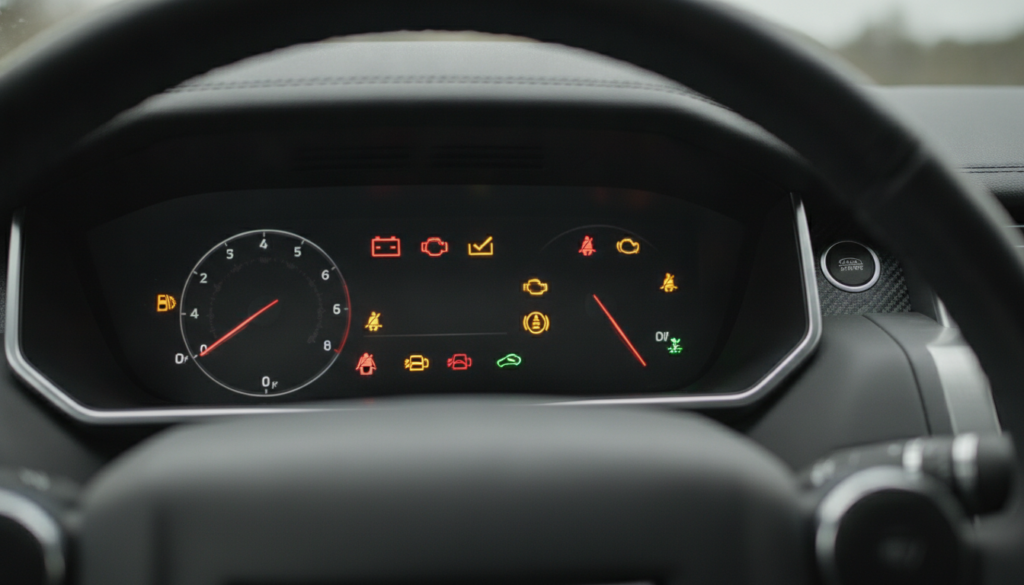

For decades, Land Rover vehicles, including the prestigious Range Rover sub-brand, have epitomized a unique blend of rugged capability and refined luxury. From traversing challenging off-road landscapes to navigating urban boulevards, these vehicles are engineered for superior performance and comfort. Beneath their elegant exterior and powerful mechanics, however, lies a sophisticated network of diagnostic systems, constantly monitoring the vehicle’s health. The dashboard warning lights are the primary interface for this system, acting as critical communicators between the intricate machinery and the driver. Understanding these symbols is not merely about deciphering a cryptic code; it is about proactive vehicle management, ensuring safety, and preserving the considerable investment in a Land Rover. Each illuminated icon, whether a subtle amber glow or an insistent red flash, conveys a specific message, ranging from minor alerts to urgent calls for immediate attention. This methodical interpretation empowers owners to respond appropriately, preventing potential issues from escalating and safeguarding the legendary performance that defines every Land Rover journey.
Decoding the Language of Your Land Rover’s Dashboard
The sudden illumination of a dashboard light can transform a smooth journey into a moment of anxiety for any Land Rover owner. The sheer number of symbols often appears as an inscrutable code, fostering uncertainty that can lead to immediate worry about costly repairs, potential breakdowns, or even compromises to safety, especially when far from home or tackling challenging terrain. Yet, these indicators are not harbingers of doom; they are the vehicle’s sophisticated way of communicating its status, designed to give precise, actionable information to protect your investment and ensure continued adventure.
Land Rover’s diagnostic systems, honed through decades of engineering excellence, are a testament to this proactive approach. From the pioneering Velar concept in 1967, which ultimately led to the first Range Rover’s public release around 1969-1970, these vehicles have consistently integrated advanced monitoring capabilities. Modern Land Rovers utilize a color-coded hierarchy for their warning lights: red signals a critical issue demanding immediate action, amber or yellow indicates caution and a need for prompt investigation, while green and blue lights are purely informational, signifying active systems like high beams or cruise control. This intuitive system empowers drivers, translating complex mechanical and electronic data into easily digestible alerts that maintain the vehicle’s integrity and safety.
Understanding the Essential Warning Light Categories
Critical Warnings: Red Lights and Immediate Action
Red dashboard lights are the most urgent communicators in a Land Rover, signifying a serious problem that necessitates immediate attention. These indicators are not to be ignored, as they often point to issues that could lead to significant vehicle damage or compromise safety if driving continues. For instance, a persistent red light for low oil pressure means the engine is not receiving adequate lubrication, which could quickly lead to catastrophic engine failure. Similarly, an engine overheating light warns of temperatures exceeding safe operating limits, risking severe damage to crucial components. Other critical red warnings might include faults within the brake system, problems with the airbag system, or critically low battery charge indicating a charging system failure. When a red light illuminates, the safest course of action is to pull over as soon as it is safe to do so, switch off the engine, consult the owner’s manual, and contact roadside assistance or a qualified Land Rover service center. Continuing to drive risks exacerbating the problem and incurring more substantial repair costs.
Advisory Alerts: Amber Lights and Timely Checks
Amber, or yellow, warning lights serve as cautionary signals, indicating a non-critical issue that still warrants prompt investigation. Unlike their red counterparts, amber lights typically do not demand immediate cessation of driving, but they should not be disregarded. These lights can signify a range of issues, from minor sensor malfunctions to components that are beginning to underperform. A common example is the Engine Management Light (often depicted as an engine outline), which could indicate anything from a loose fuel cap to a more complex sensor fault affecting emissions or fuel efficiency. Similarly, an ABS (Anti-lock Braking System) fault light suggests an issue with this safety system, though regular braking may still be functional. Other amber lights might include the Tyre Pressure Monitoring System (TPMS) warning, Dynamic Stability Control (DSC) warnings, or for diesel models, an AdBlue/Diesel Exhaust Fluid (DEF) low warning. While the immediate danger is less, addressing these warnings in a timely manner is crucial to prevent minor issues from evolving into more significant, potentially costly problems. Consulting the vehicle’s owner’s manual for specific details on each light and scheduling a diagnostic check with a technician is a prudent next step.
- Engine Management Light: Often a sensor issue or minor fault, but can indicate more serious engine problems that affect performance or emissions.
- ABS Warning Light: Indicates an issue with the anti-lock braking system, meaning it may not function correctly during emergency braking.
- TPMS Warning Light: Signals low tire pressure in one or more tires, or a sensor malfunction requiring inspection.
- DSC Warning Light: Indicates the Dynamic Stability Control system is either active, has been manually deactivated, or has a fault that needs attention.
- AdBlue/DEF Low Warning: For diesel models, this light alerts the driver to low Diesel Exhaust Fluid levels, which must be refilled to maintain emissions compliance.
Common Land Rover and Range Rover Warning Lights Explained
The Engine Management Light: Decoding the “Check Engine” Signal
The illuminated Engine Management Light, often referred to as the “Check Engine” light, is among the most frequently observed amber warnings in any vehicle, including Land Rovers and Range Rovers. While it can often indicate a straightforward issue, such as a loose fuel cap or a faulty oxygen sensor, it can also point to more significant engine problems. Land Rovers, despite their robust design, are sometimes noted for engines that, while powerful, can be comparatively thirstier or experience sensor malfunctions affecting performance and fuel consumption. This light is an alert from the onboard diagnostic system, flagging anything from minor misfires to issues within the exhaust or emissions control systems. Upon its illumination, drivers should first ensure their fuel cap is securely tightened. Beyond that, monitoring the vehicle’s behavior for any changes—such as reduced power, unusual noises, or excessive smoke—is crucial. If the light persists or if there are noticeable performance issues, professional diagnosis is essential to pinpoint the exact cause and prevent potential long-term damage.
Brake System and ABS Warnings: Ensuring Stopping Power
Brake system warnings are paramount for safety in any vehicle, and especially so in a Land Rover, given their significant weight and varying operating conditions. A general brake warning light, often depicted as an exclamation mark within a circle, typically indicates a low brake fluid level or excessive wear on the brake pads. Either scenario directly impacts the vehicle’s stopping power and demands immediate attention. Distinct from this is the ABS (Anti-lock Braking System) warning light, usually represented by the letters “ABS” within a circle. This light signals a fault within the ABS, meaning that while the primary braking system may still function, the anti-lock feature—which prevents wheel lock-up during hard braking—is compromised. For Range Rovers, where robust braking is critical given their mass and the varied terrains they are designed to conquer, any brake-related light should prompt an immediate professional inspection. Ignoring these warnings not only risks safety but also potentially leads to more extensive and costly repairs to these vital components.
Battery and Charging System Alerts: Powering Your Journey
The battery warning light, resembling a car battery, indicates an issue with the vehicle’s charging system, not necessarily the battery itself. This typically means the alternator, which generates electrical power to run the vehicle’s systems and recharge the battery, is malfunctioning. Given the advanced electronics and luxury features prevalent in Land Rovers and Range Rovers, a healthy charging system is fundamental. A failing alternator can lead to the battery draining, eventually causing the vehicle to lose power and cease functioning. Upon seeing this light, drivers might first check for obvious issues like loose battery cable connections, but often, the problem lies deeper within the alternator or voltage regulator. Since all vehicle systems rely on a steady supply of electrical power, a persistent battery warning light warrants prompt professional assistance. Driving for extended periods with a faulty charging system risks stranding the vehicle and potentially damaging other electrical components.
Responding to Dashboard Warnings: Next Steps and Preventive Measures
Immediate Actions for Critical Red Lights
When a critical red warning light illuminates on a Land Rover’s dashboard, the imperative is immediate and decisive action. For instance, imagine a driver, after a fulfilling day of exploring, encounters a red oil pressure light suddenly flashing. The methodical approach dictates finding the nearest safe location to pull over, away from the flow of traffic. Once stopped, the engine should be switched off to prevent further damage. The vehicle’s owner’s manual provides crucial, model-specific guidance on what each red light signifies and the recommended initial steps. Simultaneously, contacting roadside assistance or a qualified Land Rover service center is paramount. Attempting to continue driving with a critical red warning light active carries substantial risks, not only for the vehicle’s mechanical integrity but also for the safety of its occupants and others on the road. This swift, informed response can be the difference between a minor intervention and a major repair.
Proactive Measures and Regular Maintenance
While understanding warning lights is crucial for reactive problem-solving, much can be done proactively to prevent their illumination in the first place. Regular servicing, adhering strictly to the manufacturer-recommended schedule, is the cornerstone of maintaining a Land Rover’s diagnostic health. These vehicles, despite their incredible prestige, benefit immensely from diligent maintenance to mitigate potential common issues such as engine inefficiencies or handling characteristics like body lean. During routine service, technicians equipped with specialized diagnostic tools can often detect nascent problems before they trigger a dashboard warning. This is particularly vital for Land Rovers, whose complex systems can sometimes present unique fault codes that generic OBD-II scanners might miss. Competitors in the luxury SUV market, such as Audi, BMW, and Porsche, similarly emphasize the critical role of regular service in preserving vehicle performance and value. Investing in consistent, professional maintenance acts as an insurance policy, ensuring the longevity and reliability of a Land Rover, allowing owners to fully appreciate its legendary capabilities without unnecessary interruptions.
Maintaining Your Land Rover’s Diagnostic Health
Beyond the Lights: Understanding Your Vehicle’s Overall Health
Dashboard warning lights are undoubtedly vital communicators, but they represent only one facet of a Land Rover’s overall health. Astute owners learn to recognize other subtle cues that can indicate an impending issue, often before a light ever illuminates. These might include unusual noises emanating from the engine or suspension, unfamiliar odors, or slight changes in the vehicle’s handling dynamics—for example, an unexpected increase in body lean during turns. A Land Rover’s sophisticated engineering means that its systems are interconnected; a change in one area can subtly affect another. For instance, a methodical driver might notice a slight alteration in brake pedal feel long before the ABS light flickers, prompting an early investigation. Paying close attention to these non-verbal signals empowers drivers to act preventively, transforming them into more engaged custodians of their vehicle’s well-being and often averting more significant repairs down the line. This holistic awareness complements the formal warnings, providing a comprehensive picture of the vehicle’s operational status.
The Role of Professional Diagnostics and Genuine Parts
When a dashboard warning light illuminates, or when subtle signs suggest an underlying issue, the expertise of certified Land Rover technicians and the use of genuine parts become indispensable. Land Rover vehicles, particularly the Range Rover sub-brand, incorporate highly integrated and complex electronic systems that require specialized diagnostic tools for accurate fault code interpretation. Generic diagnostic scanners may only provide basic codes, lacking the granular detail necessary to properly identify and rectify the problem specific to a Land Rover. Moreover, utilizing genuine Land Rover parts ensures compatibility, optimal performance, and adherence to the manufacturer’s rigorous quality standards. A Range Rover, with its “incredible prestige among the motoring community” and its blend of “style and off-road abilities,” is a significant investment. Ensuring its diagnostic health through proper interpretation of dashboard warnings and timely professional intervention is paramount to preserving its renowned pedigree and performance, guaranteeing that the vehicle continues to offer the luxurious and capable driving experience for which it is celebrated.
What do the different colors of Land Rover warning lights mean?
Land Rover warning lights follow a standard color code: red lights indicate a critical issue requiring immediate attention, amber/yellow lights signal a non-critical problem that needs timely investigation, and green or blue lights are purely informational, indicating an active system.
What should I do if my Land Rover’s engine management light (check engine light) comes on?
If the engine management light illuminates, first check that your fuel cap is securely tightened. If it remains on, monitor your vehicle for any changes in performance, unusual noises, or smoke. While not always critical, it’s best to have a qualified technician perform a diagnostic check soon to identify the underlying cause, as it can indicate issues affecting emissions or engine performance.
Is it safe to drive with an amber warning light on?
Driving with an amber warning light is generally considered safe for a short period to reach a service center, as these lights indicate a non-critical issue. However, it is not advisable to ignore them for extended periods, as minor problems can escalate into more significant, costly repairs or eventually affect the vehicle’s safety systems. Always consult your owner’s manual for specific advice related to the illuminated light.
Why is it important to use certified Land Rover technicians for diagnostics and repairs?
Certified Land Rover technicians possess specialized training and access to proprietary diagnostic tools specifically designed for the complex electronic and mechanical systems of Land Rover vehicles. This ensures accurate fault code interpretation and proper repairs using genuine parts, which maintain the vehicle’s integrity, performance, and warranty, especially given the sophisticated nature of models like the Range Rover.
What are some common issues Land Rover owners might experience that trigger warning lights?
Beyond general engine or brake issues, some Land Rover models might experience warnings related to the Tyre Pressure Monitoring System (TPMS), Dynamic Stability Control (DSC), or for diesel variants, the AdBlue/Diesel Exhaust Fluid (DEF) levels. Owners might also encounter lights related to electrical system anomalies or issues affecting their sophisticated off-road features.

