
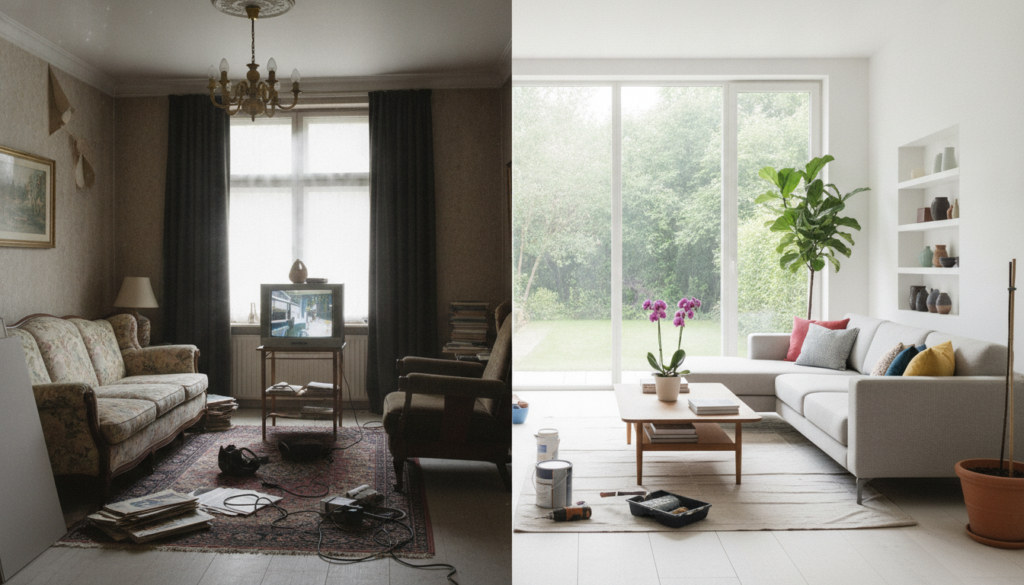

Many homeowners today find themselves in a peculiar predicament. The aspiration of a “forever home” often collides with the shifting realities of life: growing families, evolving careers, or simply a changing aesthetic preference. What once felt like a sanctuary can begin to feel constricting, outdated, or fundamentally unsuited to current needs. With the housing market’s complexities, including the allure of historically low mortgage rates for existing homeowners and the daunting costs of new properties in 2026, the traditional path of “selling and upgrading” isn’t always viable. This leaves many feeling trapped, their aspirations for a more functional living space seemingly out of reach.
This mismatch between one’s living environment and daily demands can manifest as persistent frustration. Perhaps the living room feels perpetually cramped, the kitchen layout inspires culinary despair, or the children’s bathroom situation has escalated to a daily saga. This constant friction erodes comfort and peace of mind, transforming the very place meant for solace into a source of stress. The thought of major renovations might seem overwhelming, financially prohibitive, or logistically impossible, further exacerbating the feeling of being stuck in an unworkable space.
However, feeling marooned in an unsuitable home doesn’t mean you’re out of options. Before considering the momentous decisions of relocation or extensive structural overhauls, there are numerous resourceful, often cost-effective strategies to revitalize your current residence. By re-evaluating existing spaces, embracing strategic organization, or even leveraging external amenities, you can redefine your home’s functionality and restore its appeal. This methodical approach can empower you to transform your dwelling into a space that truly works for you, aligning with your lifestyle and needs without the immediate upheaval of a large-scale change.
When Your Home Feels Restrictive: Understanding the Challenge
The sentiment of a home no longer fitting its inhabitants’ lives is a common experience, evolving beyond fleeting dissatisfaction to a profound sense of constraint. What once accommodated a couple might struggle with the demands of a growing family, or a vibrant social hub might now feel too large for empty-nesters. This disconnect often stems from shifts in personal circumstances coupled with the practicalities of a competitive housing market, which, as observed in 2026, continues to present challenges for those contemplating a move. The emotional toll of living in an ill-suited environment can be significant, subtly influencing daily moods and overall well-being. It can lead to persistent agitation, making a space that should offer respite instead feel like a constant reminder of unmet needs.
Understanding the root cause of this discontent is the first step toward finding a resolution. Is it a lack of physical space, an outdated aesthetic, or a functional layout that simply doesn’t support modern living? Pinpointing these specific issues can illuminate the path forward, whether it involves minor adjustments or a more substantial re-evaluation of your living situation. Many homeowners find themselves grappling with a series of minor inconveniences that, when accumulated, create a pervasive sense of unhappiness with their dwelling. Recognizing these specific pain points allows for a more targeted and effective approach to making your home work for you again.
Unlocking Hidden Potential: Making Your Current Space Work
Before considering drastic changes like moving or extensive renovations, it is often worthwhile to explore the untapped potential within your existing home. Many spaces are underutilized or can serve multiple purposes with a little creative thinking. This approach allows for significant improvements without the substantial financial and logistical burdens of major construction.
Redefining Rooms: Beyond Their Intended Use
One of the most effective ways to reclaim functionality is to look at existing areas with a fresh perspective. Closets, for instance, are often seen merely as storage but can be transformed into compact home offices, discreet pantry extensions, or even small, functional utility nooks. Similarly, a wide hallway, traditionally a passageway, might accommodate built-in shelving, a slim seating bench, or a display area for art, adding both utility and character. Even the space under a staircase can become a clever storage solution or a cozy reading alcove. This practice of repurposing challenges conventional notions of room function, revealing opportunities for greater efficiency and comfort that might otherwise be overlooked.
Consider the example of a seldom-used guest bedroom: could it become a hybrid space, serving as both an occasional sleeping area and a dedicated craft room or gym? By designing for flexibility, you empower your home to adapt to your evolving needs, making it a truly responsive environment. This adaptability is key to long-term satisfaction without constant overhauls.
The Art of the Reset: Decluttering for Clarity
Beyond structural changes, the psychological impact of a decluttered and organized home cannot be overstated. A cluttered environment can contribute to stress and a feeling of being overwhelmed, diminishing the comfort and appeal of your living space. Jeff Somers, a freelance writer and home maintenance enthusiast, suggests that tackling one room at a time can be incredibly effective. Begin by clearing out accumulated items, cleaning thoroughly, and then reassessing the space. A fresh coat of paint, for instance, can dramatically alter the feel of a room, making it appear brighter and more inviting.
This methodical approach, room by room, can instill a renewed sense of pride and control over your home. It’s not just about creating physical space; it’s about creating mental clarity and a positive relationship with your surroundings. Even if a room remains primarily for storage, ensuring it is neat and organized transforms it from a source of anxiety into a functional asset. This internal transformation often paves the way for a more positive outlook on the entire home.
Expanding Your Horizons: Utilizing External Solutions
Sometimes, the limitations of your home are simply non-negotiable, despite all efforts to optimize internal space. Finite square footage and existing layouts mean certain amenities might genuinely be beyond the scope of internal modifications. In such cases, a pragmatic approach involves looking outside your four walls to meet specific needs, essentially extending your home’s functionality into the wider community.
Beyond Your Walls: Amenities as Home Extensions
Consider what your home truly lacks and whether an external service could fill that void. If your house doesn’t offer space for a dedicated workout area, a local gym membership can provide all the necessary equipment and environment. Similarly, for those needing a quiet, professional workspace away from home distractions, a co-working space offers an ideal solution. These facilities provide the infrastructure and atmosphere conducive to productivity without requiring you to sacrifice valuable square footage at home. For issues of overflowing closets or a need for seasonal storage, a local storage unit can liberate significant space within your residence, making your home feel much larger and more organized. While the ideal might be to have every amenity under your own roof, these external options offer practical, often temporary, solutions that can significantly improve your daily living experience until a more permanent real estate decision can be made. This strategy allows homeowners to fulfill their needs without the immediate pressure of an expensive overhaul.
Injecting Your Identity: Personalizing for Comfort and Joy
After investing significant time and resources into purchasing a home, many homeowners paradoxically strive to keep their interiors “neutral” to appeal to potential future buyers. This preoccupation with resale value can inadvertently lead to a living space that feels impersonal, as if you are merely a transient occupant rather than its true resident. The constant thought of “what will others think?” can dictate paint colors, furniture choices, and even major design decisions, preventing you from truly making the space your own.
Making It Truly Yours: Prioritizing Comfort Over Resale
If you anticipate remaining in your current home for the foreseeable future, a powerful shift in mindset involves prioritizing your comfort and happiness over hypothetical future resale value. This means embracing colors, textures, and decor that genuinely bring you joy, rather than adhering to generalized market trends. Display your treasured collections, choose furniture that reflects your personal style, and undertake DIY projects that enhance your daily living experience, even if they deviate from broad appeal. For example, if you dream of a vibrant, unconventional kitchen, pursuing that vision can dramatically improve your daily mood and connection to your home, regardless of whether it aligns with standard real estate expectations. This deliberate act of personalization can transform a house into a truly cherished home, alleviating the discomfort that might otherwise drive the desire to move. The focus here is on creating a sanctuary tailored precisely to your unique preferences and lifestyle, fostering a profound sense of belonging.
The Crossroads: Renovate, Relocate, or Refine?
When smaller adjustments no longer suffice, the significant question arises: should you renovate your existing home, or is it time to consider relocating? This juncture marks a critical decision point, demanding a thorough evaluation of both practicalities and personal aspirations. It’s about weighing the known comforts and challenges of your current home against the potential unknowns and fresh starts of a new one. The choice is rarely simple, often intertwined with financial considerations, emotional attachments, and future life goals. Understanding the various facets of each option is crucial for making a choice that aligns with your long-term vision for your living environment.
Evaluating Your Options: A Strategic Framework
The journey to a more suitable living situation often leads to a crucial evaluation of two primary paths: undertaking significant renovations or seeking a new residence. This choice is rarely straightforward, influenced by a blend of practical constraints, financial implications, and emotional attachments. To make a truly satisfying decision, homeowners are encouraged to adopt a methodical approach, examining a range of factors that extend beyond immediate desires. Understanding the long-term impact on your finances, lifestyle, and even community ties is paramount. Tom Becker, Chief Lending Officer at Hanscom Federal Credit Union, often advises starting small, perhaps with a single room, to gauge your enthusiasm for larger projects. This allows you to experience the process of change before committing to a major overhaul or a move, which can both be emotionally and financially demanding.
Before proceeding, it is vital to reflect on several key considerations:
- Physical Limitations: Assess your home’s existing layout and the size of your lot. Can the structural changes or additions you envision actually be realized within the current physical footprint? For instance, wanting a diving pool may be unrealistic if your property has a high water table, or adding a second story might be structurally prohibitive.
- Municipal Regulations: Explore local zoning laws and building codes. Many communities impose restrictions on the land-to-building ratio or setback requirements, which could limit the scope of an expansion. Understanding these rules early can prevent costly design changes later. This might also impact how property assessments evolve, which is an important financial consideration.
- Neighborhood Value: Consider the potential impact of a renovation on your home’s market value relative to other properties in your area. Over-improving your home beyond the typical value of neighboring properties could make it harder to recoup your investment when it’s time to sell. It’s often wiser to match the general standard of the street than to create an outlier.
- Your Budget: Establish a realistic budget for either renovating or moving. For a new home, factor in not just the purchase price but also maintenance, property taxes, moving expenses, real estate commissions, and loan charges. For renovations, account for potential increases in property assessments, local permits, and insurance costs.
- Return on Investment (ROI): Evaluate how long you plan to stay in your home. If relocating, will you reside in the new home long enough to offset closing and moving costs? If renovating, research the typical returns on various home improvements. While a new carpet installation might offer a good return, a highly specialized, expensive remodel might not yield a full return upon sale. Getting a report on common home improvement returns can guide your choices.
Beyond these practical considerations, the emotional aspect of change is significant. Moving to a new home often entails adjusting to a new neighborhood, altering work commutes, changing schools for children, and forging new friendships. Conversely, living through a renovation project can be equally taxing, involving periods of dust, noise, and disorder, coupled with the possibility of unexpected complications that can inflate costs and extend timelines. Evaluating both the financial and emotional costs thoroughly, as suggested by experts like Tom Becker, is essential for a decision that truly aligns with your well-being.
What are the initial steps if I feel my home no longer suits my needs?
Start by identifying specific pain points, such as lack of space or outdated features. Then, assess if minor adjustments like decluttering or repurposing rooms can address these issues before considering major renovations or moving.
How can I create more space without a major renovation?
Look for underutilized areas like closets, hallways, or spaces under stairs, which can be converted into functional zones like home offices, pantries, or reading nooks. Maximizing vertical space with shelving and opting for multi-functional furniture can also make a significant difference.
When should I consider external solutions for my home’s limitations?
If your home physically cannot accommodate certain needs—like a gym, dedicated office, or ample storage—external amenities such as a gym membership, co-working space, or local storage unit can effectively extend your home’s functionality.
What factors are crucial when deciding between renovating and moving?
Key factors include your home’s physical limitations, local municipal regulations, the potential impact on neighborhood value, your overall budget, and the expected return on investment. Emotional considerations, like adjusting to a new community or living through construction, are also vital.
Is it better to personalize my home or keep it neutral for resale?
If you plan to live in your home for the foreseeable future, prioritizing personalization can significantly enhance your comfort and happiness. While a neutral palette might appeal to more buyers, a home that truly reflects your style will contribute more to your daily well-being.

