
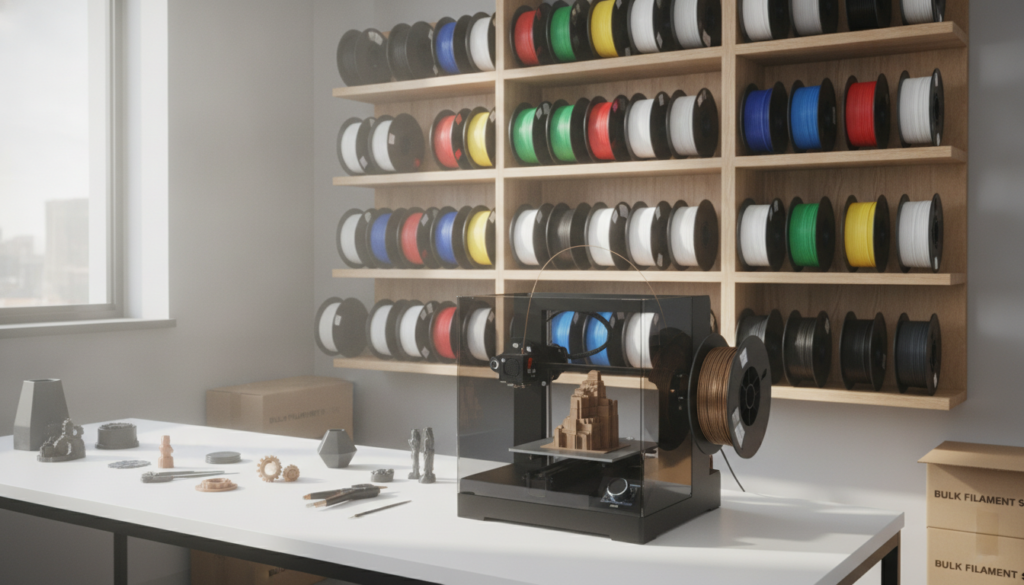

The landscape of 3D printing is continuously evolving, with enthusiasts and professionals alike constantly seeking ways to optimize their workflows and enhance productivity. For those who engage in frequent or large-scale additive manufacturing, the traditional approach of relying on standard 1-kilogram filament spools often presents a series of logistical and economic hurdles. From the constant interruption of print jobs to the accumulating costs and packaging waste, these smaller formats can hinder efficiency rather than promote it. However, a significant shift is underway in 2026, as an increasing number of makers, educators, and businesses are turning to bulk filament solutions. This strategic move is not merely about stocking up; it represents a comprehensive re-evaluation of how materials are sourced, stored, and utilized, promising a more streamlined, cost-effective, and environmentally conscious printing experience. The decision to invest in larger quantities of filament can profoundly impact operational consistency and overall project success, transforming potential frustrations into seamless production runs.
Uninterrupted Production: The Core Advantage of Bulk Filament
For any serious 3D printing operation, whether a bustling print farm or a dedicated home studio, the rhythm of continuous creation is paramount. The frequent need to pause a print job, remove an empty spool, and load a new one can disrupt this flow, leading to wasted time and potential print imperfections. Imagine Deirdre, a product designer, working on a series of large prototypes for a client. Each time her printer halts for a filament change, she loses valuable minutes, and the transition point on the print itself could introduce a visible seam or weakness. Bulk filament addresses this challenge directly, allowing printers to run for significantly longer durations without intervention, thereby maintaining an unbroken production cycle.
Minimizing Downtime and Spool Changes
The operational calculus for professionals often hinges on minimizing non-productive time. Standard spools, while convenient for casual use, become bottlenecks in high-volume environments. Opting for larger spools—ranging from 3kg up to 15kg—means fewer physical interactions with the printer during long jobs. This is particularly critical for models that span many hours or even days to complete. By drastically reducing the frequency of spool changes, operators can allocate their time to more complex design tasks, post-processing, or managing multiple machines, rather than constantly monitoring filament levels. This efficiency gain translates directly into higher output and a smoother production schedule for projects requiring extensive material use.
Achieving Consistent Print Quality Across Projects
Consistency is often the hallmark of professional-grade 3D prints. When multiple standard spools are used for a single large object or a batch of identical parts, there’s an inherent risk of minor variations in filament diameter, color, or material composition between rolls, even from the same brand. These subtle differences can manifest as visible lines, varying material properties, or even extrusion issues, compromising the final product’s aesthetic and structural integrity. A single, large bulk spool, however, guarantees that an entire print run—or a significant portion of it—originates from the same batch of material. This uniformity is crucial for ensuring tight diameter tolerances and consistent melt flow, leading to stronger layer bonding and a smooth surface finish across all prints. For projects where precision and repeatability are non-negotiable, bulk filament offers an unparalleled advantage in maintaining quality standards.
The Financial and Environmental Logic of Large Spools
Beyond operational efficiency, the decision to purchase 3D printing filament in bulk carries substantial economic and ecological benefits. In an era where both financial prudence and environmental responsibility are increasingly prioritized, bulk options present a compelling argument for frequent users. The concept of economy of scale applies directly here, making larger purchases inherently more cost-effective per unit of material, while simultaneously reducing the ecological footprint associated with packaging and shipping.
Unlocking Significant Cost Savings
One of the most immediate and tangible benefits of buying bulk filament is the reduction in cost per gram or per kilogram. Just as with many other commodities, purchasing larger quantities typically results in a lower unit price. For instance, a 5-kilogram spool of PLA from a reputable manufacturer might cost less per kilogram than five individual 1-kilogram spools of the same material. Over time, for users who consume significant amounts of filament, these savings accumulate into substantial figures, directly impacting the profitability of commercial ventures or reducing the overall expenditure for dedicated hobbyists. This cost-effectiveness allows for more ambitious projects or a higher volume of production within the same budget constraints.
Contributing to Sustainable Printing Practices
The environmental impact of 3D printing, particularly concerning plastic waste from failed prints and packaging, is a growing concern. Bulk filament addresses the latter by significantly reducing packaging waste. Instead of discarding multiple cardboard boxes and plastic bags from smaller spools, a single bulk spool comes with minimal packaging for a much larger quantity of material. This translates to fewer manufacturing resources expended on packaging, less material in landfills, and a smaller carbon footprint associated with shipping. Brands like Siraya, which prioritize eco-friendly choices, emphasize that their bulk filament collections are designed to help creators print sustainably without compromising on quality or performance, aligning with a broader global push towards more responsible consumption and production practices in 2026.
Practical Considerations for Adopting Bulk Filament
While the advantages of bulk filament are clear, successful integration into a 3D printing workflow requires careful consideration of several practical aspects. These range from ensuring physical compatibility with existing equipment to implementing proper storage solutions. Overlooking these details can negate many of the benefits, potentially leading to frustration rather than increased efficiency. A methodical approach to these preparations ensures a smooth transition to larger spools.
Essential Setup Adjustments for Larger Spools
Standard 3D printers are typically designed to accommodate 1-kilogram spools, and attempting to mount a much heavier 5kg or 10kg spool on a standard holder can lead to problems. The increased weight can strain the printer’s frame, cause the original holder to buckle, or result in an uneven feed due to friction. Many frequent users find it necessary to invest in a more robust, often external, spool holder. These heavy-duty solutions, sometimes featuring internal bearings for smooth rotation, can be desk-mounted or even wall-mounted for maximum stability. Ensuring that the spool holder is rated for the specific weight of the bulk filament is a critical step to prevent mechanical issues and ensure a consistent material feed, which is vital for uninterrupted printing.
Safeguarding Filament Integrity in Bulk Quantities
Moisture is the nemesis of most thermoplastic filaments. Materials like PLA, PETG, and especially Nylon (PA6/PPA) are hygroscopic, meaning they absorb moisture from the air. When moisture-laden filament is heated in the extruder, the trapped water vaporizes, creating micro-bubbles that can lead to popping sounds, inconsistent extrusion, poor layer adhesion, and ultimately, ruined prints. Bulk spools, due to their sheer volume, present a greater challenge for drying and long-term storage once opened. It becomes essential to have large-capacity vacuum bags, airtight containers, and desiccant packets to protect the filament from humidity, especially during extended printing sessions or when stored for future use. Regular drying of the bulk spool, perhaps in a dedicated filament dryer or a modified oven, is a practice many professionals adopt to maintain optimal print quality and prevent material degradation.
Discovering Quality Bulk Filament Options in 2026
The market for 3D printing filament has expanded considerably, offering a diverse array of materials and brands. However, when making the commitment to bulk purchases, the selection process becomes even more critical. The initial investment is higher, and the consequence of choosing a low-quality or unsuitable product can be substantial. Therefore, identifying reliable suppliers and understanding the specific properties of different filament types are paramount for any frequent 3D printer operator in 2026.
Vetting Brands for Reliability and Performance
Before committing to a large, multi-kilogram spool, it is highly advisable to first test a smaller spool from the intended brand. This due diligence ensures that the filament meets specific quality expectations, including consistent diameter tolerance, good color saturation, and reliable print performance on your particular machine. Brands that have a long-standing reputation for quality and customer satisfaction, such as Gizmo Dorks or Siraya, are often safer bets for bulk purchases. Siraya, for instance, emphasizes strict quality checks on every roll of their bulk filament to ensure smooth feeding, accurate diameter, and dependable results, vital for any serious maker. Skipping this verification step could lead to significant financial loss and a stockpile of unusable material.
Exploring Diverse Material Choices for Every Project
The availability of bulk filament extends beyond the common PLA and ABS to include a variety of specialized materials, catering to diverse project needs. Understanding the properties of these materials is key to leveraging bulk purchases effectively:
- PLA (Polylactic Acid): A versatile and easy-to-print material, excellent for prototypes, artistic pieces, and general-purpose models. Widely available in bulk.
- PETG (Polyethylene Terephthalate Glycol): Offers better strength, heat resistance, and flexibility than PLA, making it suitable for functional parts and containers. Often available in larger spools.
- ABS (Acrylonitrile Butadiene Styrene): Known for its toughness and impact resistance, ideal for functional parts that need to withstand stress. Requires careful printing conditions.
- TPU (Thermoplastic Polyurethane): Flexible and durable, perfect for impact-resistant prints like phone cases, gaskets, and wearable items. Bulk options are increasingly common.
- PPA (Polyphthalamide): An advanced nylon-based material, PPA offers high strength, heat resistance, and chemical resistance, often used in automotive and industrial components.
- PA6 (Nylon 6): A more common nylon, offering good flexibility and strength, though it’s more susceptible to moisture absorption than PPA.
- CPE (Co-Polyester): Similar to PETG but with enhanced durability and temperature resistance, great for functional parts requiring strength and clarity.
By exploring these diverse options in bulk, frequent printers can ensure they always have the right material on hand for any project, from flexible wearables to high-strength industrial components, without the constant worry of running out.
What is the primary benefit of buying filament in bulk?
The main advantage is reduced cost per gram and fewer spool changes, leading to more continuous printing, higher efficiency, and consistent quality across large projects. It also significantly reduces packaging waste.
Are there any special equipment requirements for using bulk filament?
Yes, most standard 3D printers are not designed for the weight of bulk spools. You will likely need a heavy-duty, external spool holder that can safely support the increased weight and ensure smooth feeding.
How can I prevent bulk filament from absorbing moisture?
Due to their larger size, bulk spools require robust moisture control. Use large vacuum bags or airtight containers with desiccant packets for storage. For active printing, consider a dedicated filament dryer to maintain material integrity, especially for hygroscopic materials like nylon.
Is bulk filament suitable for all types of 3D printing projects?
Bulk filament is most beneficial for projects that are large, require high volume, or demand consistent quality across many prints. For occasional or small, varied projects, standard 1-kilogram spools might still be more convenient for experimenting with different colors or materials.

