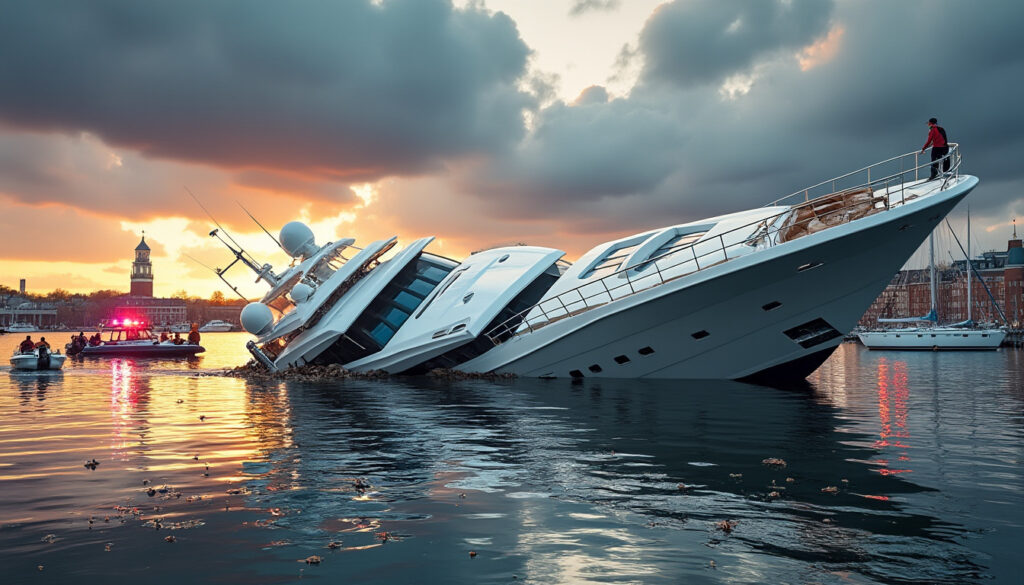

The tranquil waters of the Chesapeake Bay, typically a serene backdrop for leisurely voyages, were shattered on July 27, 2024, by a maritime incident that sent shockwaves through the luxury yachting community. Near Annapolis, Maryland, the majestic 122-foot Italian-built superyacht, Lovebug, valued at an estimated $8 million, dramatically capsized in the Rhode River. This unexpected event, involving a vessel synonymous with opulence and cutting-edge engineering, immediately ignited a flurry of questions regarding maritime safety protocols, the intricacies of vessel maintenance, and the ever-present unpredictability of the open water. Even two years later, in 2026, the incident remains a significant point of discussion, prompting ongoing reflections on preventive measures and emergency preparedness.
The Lovebug was more than just a boat; it was a floating emblem of extravagance, regularly docked at the prestigious Annapolis Yacht Club and chartered for an impressive $125,000 per week. Its design boasted world-class amenities and sophisticated engineering, embodying the pinnacle of maritime elegance. Yet, despite its grandeur, the yacht proved vulnerable, reminding seasoned sailors and novices alike that even the most advanced vessels are subject to unforeseen circumstances. The partial sinking of the Lovebug, an incident that could have been catastrophic, underscored the critical importance of swift emergency response and diligent investigation into what transpired on that fateful summer day.
Unraveling the Mystery: The Lovebug Capsizing Near Annapolis
The serene morning of July 27, 2024, gave little indication of the drama that would unfold near Annapolis. Around 12:30 p.m., the Lovebug began to list dangerously to its starboard side. High-water alarms, designed to signal a critical influx of water, were triggered. Yet, the situation escalated rapidly, underscoring how quickly maritime emergencies can develop even on calm waters. The captain, recognizing the severe peril, promptly issued a distress call that was received by both the U.S. Coast Guard and the Maryland Natural Resources Police, setting in motion a rapid and coordinated rescue effort.
The Immediate Response and Heroic Rescue Efforts
As the Lovebug continued its alarming tilt, the five crew members, including the captain who commendably was the last to depart, were forced to abandon ship. Fortunately, all individuals were safely rescued, albeit with some reporting minor complaints such as head soreness. The swift and decisive actions of nearby boaters, notably Trevor Hardman from Tour Boat Annapolis, alongside the professional response from the U.S. Coast Guard and Maryland Natural Resources Police, were instrumental in ensuring that no lives were lost. This coordinated effort highlighted the profound impact of community vigilance and preparedness in maritime emergencies.
Examining the Aftermath: Investigation and Environmental Protection
In the aftermath of the Lovebug’s capsizing, the focus immediately shifted to understanding the cause and mitigating any environmental impact. Investigations, led by various agencies, meticulously examined maintenance records, eyewitness testimonies, and the vessel’s structural integrity. Preliminary findings indicated that while high-water alarms were active, the rate or volume of water ingress was too substantial to be corrected. Investigators considered potential factors ranging from structural failures and equipment malfunctions to human error, seeking to reconstruct the full sequence of events that led to the $8 million yacht capsizing near Annapolis.
Safeguarding the Chesapeake Bay: Environmental Measures
One of the paramount concerns following any maritime incident is the potential for environmental contamination. Authorities acted quickly to deploy containment barriers around the Lovebug to prevent fuel and oil leakage, a crucial step given the Chesapeake Bay’s delicate ecosystem. These immediate environmental protection measures proved largely successful, as no major reports of contamination emerged. Continuous monitoring, which remains active even in 2026, reinforces the ongoing commitment to preserving one of the United States’ most treasured natural resources.
The efforts to salvage the Lovebug itself presented a monumental challenge. Due to the yacht’s considerable size and value, specialized salvage teams had to be deployed. This complex operation required precision to avoid further structural damage and environmental risks. The cost of such a sophisticated recovery effort was anticipated to be hundreds of thousands of dollars, leaving the ultimate fate of the Lovebug – whether it could be repaired or deemed a total loss – uncertain for some time.
Lessons Embarked: The Broader Impact on the Yachting Community
The incident with the Lovebug resonated deeply across the international yachting community, serving as a powerful case study. Luxury yacht owners, captains, and operators scrutinized the ongoing investigation, eager to glean insights that could inform safety protocols and prevent future occurrences. Insurance companies, too, took significant notice, prompting reviews of policies, maintenance requirements, and potentially stricter regulations for both charter and private vessels. Annapolis, often referred to as the sailing capital of the United States, felt a particular impetus to reaffirm its commitment to maritime safety and best practices.
Key Takeaways for Maritime Safety in 2026
Two years on, the capsizing of the Lovebug has cemented several critical lessons for the maritime industry, shaping how vessels are operated and maintained today. These points are consistently highlighted in safety briefings and training programs throughout 2026:
- The Imperative of High-Water Alarms: While effective early warning systems are vital, their utility is entirely dependent on swift and appropriate response from the crew.
- Preparedness Saves Lives: Regular emergency drills, clearly defined protocols, and readily accessible rescue plans are indispensable for ensuring a positive outcome when unexpected events occur.
- The Value of Rapid Response: The coordinated and immediate actions of both official agencies and nearby private boaters were the decisive factor in the successful rescue of all onboard.
- Environmental Vigilance is Paramount: Proactive and immediate deployment of containment measures is crucial for protecting fragile marine ecosystems from potential disaster.
The incident continues to prompt a renewed focus on these fundamental aspects of maritime safety, reinforcing that even with advanced technology and expert crews, constant vigilance and adherence to safety principles are non-negotiable.
What caused the $8 million yacht Lovebug to capsize near Annapolis in 2024?
The exact cause remains under investigation. While high-water alarms sounded, indicating the yacht was taking on water, the rapid or severe influx overwhelmed systems. Investigators continue to examine potential structural failures, equipment malfunctions, and human error to determine the precise reason.
Were there any fatalities or serious injuries during the Lovebug incident?
Thankfully, there were no serious injuries or fatalities reported. All five crew members, including the captain, were safely rescued from the capsizing vessel, though some did report minor complaints such as head soreness.
What measures were taken to protect the Chesapeake Bay environment after the capsizing?
Authorities quickly deployed environmental containment barriers around the Lovebug to prevent any potential fuel or oil leakage. While continuous monitoring is ongoing, there have been no major reports of environmental contamination, underscoring the success of these swift protective actions.
What lessons has the yachting community learned from the Lovebug capsizing by 2026?
The incident highlighted the critical importance of functional high-water alarms paired with rapid crew response, comprehensive emergency preparedness, swift actions by rescue services and good Samaritans, and immediate environmental safety protocols. These lessons continue to inform maritime safety standards and training.
Is the Lovebug yacht expected to be repaired, or is it a total loss?
Salvaging a vessel of the Lovebug’s size and value is a complex and costly operation. Specialized teams were engaged to assess the damage and refloat the yacht. Whether it will ultimately be deemed repairable or a total loss remains subject to the full assessment and extent of the structural damage sustained.