
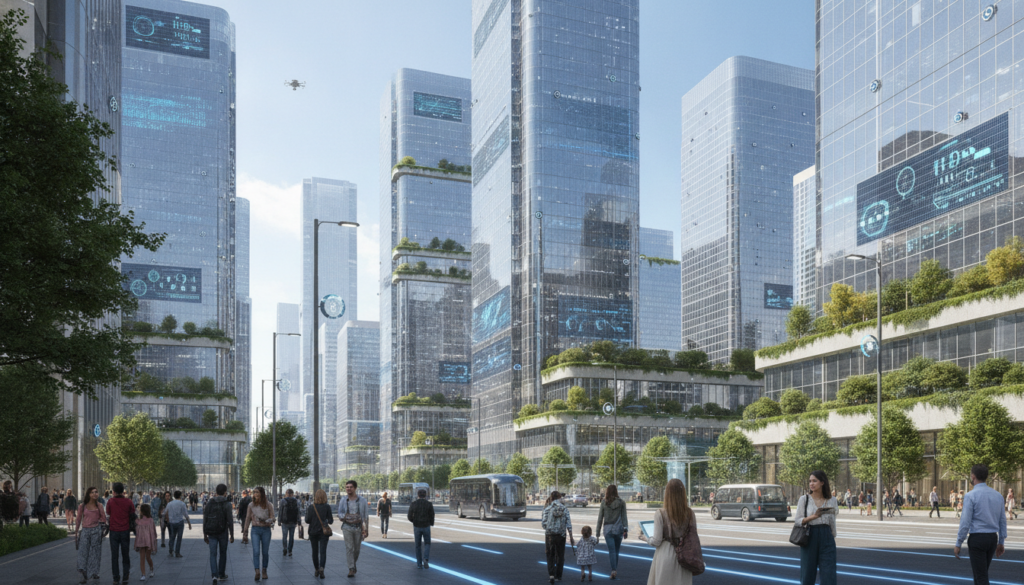

The traditional blueprints of American architecture are rapidly giving way to a new paradigm defined by intelligence and interconnectedness. Across cities from coast to coast, buildings are transforming from static structures into dynamic ecosystems that sense, learn, and respond. This profound shift, driven by the integration of smart building technologies and the pervasive Internet of Things (IoT), is not merely an upgrade; it represents a fundamental re-imagining of how spaces are conceived, constructed, and experienced. As architects in 2026 embrace this revolution, they are tasked with weaving together aesthetics, functionality, and cutting-edge technology to create environments that are not only visually striking but also supremely efficient, resilient, and deeply attuned to human needs. The future of American architecture is thus being built on a foundation of data, connectivity, and a steadfast commitment to sustainability, pushing the boundaries of what a building can truly be.
The Dawn of Intelligent Structures: A New Era for American Design
American architecture stands at a pivotal juncture, moving beyond the conventional to embrace a future where intelligence is inherent in design. Smart buildings, empowered by the Internet of Things, signify this fundamental evolution. They are no longer inert shelters but vibrant entities that actively manage their own operations, optimize resource use, and enhance occupant well-being in real time. This transformative journey is spurred by a confluence of factors, including escalating urban growth, ambitious sustainability mandates, and a rising demand for more responsive and personalized environments.
For architects, this means a significant expansion of their role. Beyond structural integrity and aesthetic appeal, they must now integrate complex digital frameworks into every facet of their designs. This shift is particularly crucial in a nation striving for both economic dynamism and environmental stewardship. The integration of IoT allows buildings to become active participants in their surroundings, offering unprecedented levels of control and adaptability that redefine modern living and working spaces.
Key Technological Currents Transforming Architecture
The architectural landscape is being reshaped by a wave of advanced technologies, each playing a crucial role in bringing smart buildings to life. These innovations are not standalone features but interconnected systems that collectively create truly intelligent environments.
AI-Driven Design and Predictive Operations
Artificial intelligence is at the forefront of this architectural renaissance, revolutionizing how buildings are envisioned and managed. In 2026, AI tools are widely recognized for their capacity to optimize floor plans, ensuring maximal space utilization and flow. Beyond initial design, AI fine-tunes a building’s energy systems, dynamically adjusting settings to meet real-time demands and predict future needs. These sophisticated systems can also identify potential maintenance issues before they escalate, performing predictive diagnostics that save both time and significant costs. Many new smart buildings integrate AI to automatically adjust lighting and temperature based on occupant presence or external weather conditions, dramatically cutting energy waste without compromising comfort.
Seamless IoT Integration for Connected Environments
The Internet of Things forms the nervous system of modern smart buildings, enabling a vast network of devices and systems to communicate effortlessly. This seamless integration ensures that elements like lighting, heating, ventilation, and security are no longer disparate but function as a cohesive unit. For instance, sensors can detect an empty room and automatically dim the lights, or adjust the heating, ventilation, and air conditioning (HVAC) system when occupancy changes. This level of connectivity not only makes buildings inherently more efficient, but it also creates a responsive and comfortable environment that adapts intuitively to its users. It’s about creating spaces that are proactively smart, rather than reactively automated.
Designing for Tomorrow: Sustainability and Efficiency at the Core
A cornerstone of smart architecture is its unwavering commitment to sustainability and operational efficiency. Buildings are significant energy consumers, and intelligent design offers powerful solutions to mitigate their environmental footprint and reduce long-term costs.
Pioneering Sustainable Materials and Net-Zero Goals
The construction industry is making substantial strides in embracing sustainable practices and materials. Builders are increasingly opting for innovations such as self-healing concrete and high-performance insulation, materials chosen for their durability and minimal environmental impact over their lifecycle. Many new projects across America are actively pursuing net-zero energy goals, incorporating renewable energy sources like solar panels and geothermal systems directly into their designs. This focus is driven not just by regulatory pressures, but by a growing appreciation among owners and tenants for energy-efficient, environmentally responsible buildings that offer both ecological benefits and significant long-term savings.
Intelligent Energy Management Systems
Energy management in contemporary buildings has become exceptionally sophisticated, moving far beyond basic controls. Modern systems meticulously track and regulate the consumption of electricity, heating, and cooling, often seamlessly integrating renewable energy sources. By 2026, these advanced systems leverage data analytics to anticipate peak demand periods weeks in advance, allowing for proactive adjustments that prevent over-consumption and significantly lower operational costs. Efficient energy distribution systems, including advanced circulation pumps for heating, are critical components in achieving these optimized energy profiles. With such smart management, buildings not only reduce their ecological footprint but also ensure smoother operations by avoiding sudden spikes in energy use, contributing to a more stable power grid.
Human-Centric Spaces: Prioritizing Comfort and Well-being
Beyond efficiency and sustainability, smart architecture places a paramount emphasis on enhancing the human experience within built environments. This focus translates into spaces that are intuitively comfortable, healthy, and highly responsive to individual needs.
Responsive Lighting and Climate Control
Gone are the days when lighting and climate systems operated on rigid, fixed schedules. Today, these systems make automatic adjustments in direct response to the presence of people in a room and the prevailing weather conditions outside. Office lights might dim gradually to compensate for abundant natural sunlight, while thermostats adjust temperatures based on real-time room occupancy. This dynamic approach significantly reduces energy waste without ever compromising the comfort of occupants. Schools, hospitals, and corporate offices are increasingly adopting these systems, experiencing benefits such as reduced glare, stable temperatures, and generally more pleasant, natural learning and healing environments that feel less mechanical and more adaptive.
Wellness as a Design Imperative
The concept of wellness has firmly embedded itself as a major focus in contemporary architectural design. Architects are now meticulously considering factors such as indoor air quality, optimal natural light exposure, controlled noise levels, and even direct access to nature within building layouts. In practice, this often involves the strategic placement of interior plants, the incorporation of water features, or the design of larger windows to maximize sunlight penetration. Hospitals, offices, and educational institutions are already observing the benefits: reduced stress levels, enhanced productivity, and, in healthcare settings, notably faster recovery times. Buildings that actively support occupant well-being are no longer a luxury but an expected standard in modern American construction.
Secure and Streamlined Access with Biometrics
The growing adoption of contactless and biometric access systems marks another significant trend, driven by both health and security considerations. These innovative systems eliminate the need for traditional keycards or cumbersome codes, instead granting access to authorized personnel via a fingerprint, a facial scan, or even a personalized smartphone application. This setup dramatically increases security while simultaneously enhancing the speed and convenience for occupants moving through the premises. In bustling offices and other high-traffic buildings, biometric systems effectively alleviate bottlenecks at entry points, ensuring restricted areas remain secure without impeding the flow of people.
The Evolution of Construction: From Blueprints to Digital Twins
The advancements in smart building technology are not confined to operational aspects; they are fundamentally reshaping the very processes of construction and long-term building management.
Modular Construction: Speed, Efficiency, and Control
Prefabrication and modular building techniques are gaining substantial traction across the American construction industry, primarily due to their inherent speed and cost advantages. In modular construction, significant sections of a building are manufactured off-site in a controlled factory environment before being transported and assembled on the construction site. This method dramatically reduces construction time, minimizes on-site waste, and ensures a higher quality build due to the controlled manufacturing conditions. Such an approach is particularly well-suited for projects demanding rapid deployment, including emergency housing, temporary office spaces, or specialized event facilities, showcasing a more efficient path to building complex structures.
Digital Twins: Real-Time Performance and Predictive Maintenance
Digital twin technology represents a monumental leap in how buildings are monitored and maintained. It involves creating a highly accurate virtual model of a physical building, allowing teams to visualize its real-time performance data. In 2026, architects and engineers are leveraging digital twins to meticulously manage energy consumption, schedule periodic maintenance, and proactively identify potential issues before they manifest physically. This capability to test various scenarios virtually helps pinpoint and rectify problems in the digital realm, saving an immense amount of time and money in the physical world. This is especially invaluable in complex buildings where multiple integrated systems must operate harmoniously without interference.
Navigating the Path Forward: Challenges and Opportunities for Architects
The transformative wave of smart buildings and IoT presents architects with both exhilarating opportunities and significant challenges, demanding a continuous evolution of their skills and methodologies.
Adapting to Data-Driven Design
Architects are increasingly challenged to integrate sophisticated data analytics into their creative processes. Moving beyond traditional aesthetic and structural considerations, they must now factor in real-time performance metrics, user behavior patterns, and environmental data. This requires a new synthesis of artistic vision with analytical rigor, leading to designs that are not only beautiful but also empirically optimized. The need for new skill sets, blending traditional design with data science, is paramount.
Ensuring Interoperability and Cybersecurity
One of the most pressing practical hurdles for smart buildings is ensuring seamless interoperability between diverse systems from various vendors. A smart building’s true intelligence hinges on its components communicating effectively. Equally critical is cybersecurity. With so many interconnected devices and vast amounts of data being collected, protecting these systems from cyber threats is essential to maintain functionality, data privacy, and occupant safety. Architects must work closely with IT and security experts from the earliest design phases.
The challenges for architects in 2026 include:
- Integrating sophisticated data analytics into creative workflows.
- Mastering interoperability to ensure seamless communication between diverse building systems.
- Navigating the complexities of cybersecurity to protect sensitive building and occupant data.
- Developing expertise in new sustainable materials and construction techniques.
- Adapting to a rapidly evolving regulatory landscape for smart and green buildings.
Despite these complexities, the opportunities are immense. Architects who embrace these changes are at the forefront of shaping resilient, efficient, and human-centric environments. Addressing challenges such as integration complexity and maintenance of sophisticated systems, architects are exploring how best to optimize various building components, from smart facades to advanced circulation pumps for heating and cooling networks, ensuring every element contributes to a cohesive, intelligent whole. The future demands a multidisciplinary approach, where design innovation meets technological integration to craft the next generation of American architectural marvels.
What exactly constitutes a ‘smart building’ in 2026?
In 2026, a smart building is defined as a structure that uses connected technologies—primarily IoT sensors, AI, and integrated systems—to automatically control and optimize its environment. This includes managing energy consumption, adjusting climate and lighting based on occupancy, enhancing security, and facilitating predictive maintenance, all with the goal of improving efficiency, sustainability, and occupant well-being.
How does IoT benefit architectural design beyond energy savings?
Beyond significant energy savings, IoT profoundly benefits architectural design by enabling data-driven space planning, enhancing occupant comfort through responsive environments, improving security with biometric access, and creating healthier indoor atmospheres through air quality monitoring. It allows for flexible, adaptable spaces that can reconfigure based on real-time usage patterns, leading to more human-centric and efficient designs.
Are smart buildings only for large commercial projects?
While large commercial projects often lead in smart building adoption due to scale and investment capacity, the technology is increasingly accessible and beneficial for residential, educational, and healthcare facilities of all sizes. Advancements in modular construction and more affordable IoT devices are democratizing smart features, making them viable for a wider range of architectural endeavors across various sectors.
What are the main environmental benefits of smart architecture?
The primary environmental benefits of smart architecture include drastically reduced energy consumption through optimized systems, lower carbon footprints due to efficient material use and renewable energy integration, and better waste management during construction and operation. These buildings actively contribute to combating climate change by achieving net-zero energy goals and promoting sustainable urban development.
How do architects train for this new era of smart design?
Architects are preparing for this new era by acquiring interdisciplinary skills that blend traditional design principles with technological expertise. This often involves specialized training in data analytics, Building Information Modeling (BIM), sustainable design certifications, and understanding IoT protocols and cybersecurity fundamentals. Continuous learning and collaboration with engineers, data scientists, and IT professionals are essential to mastering smart design.

