
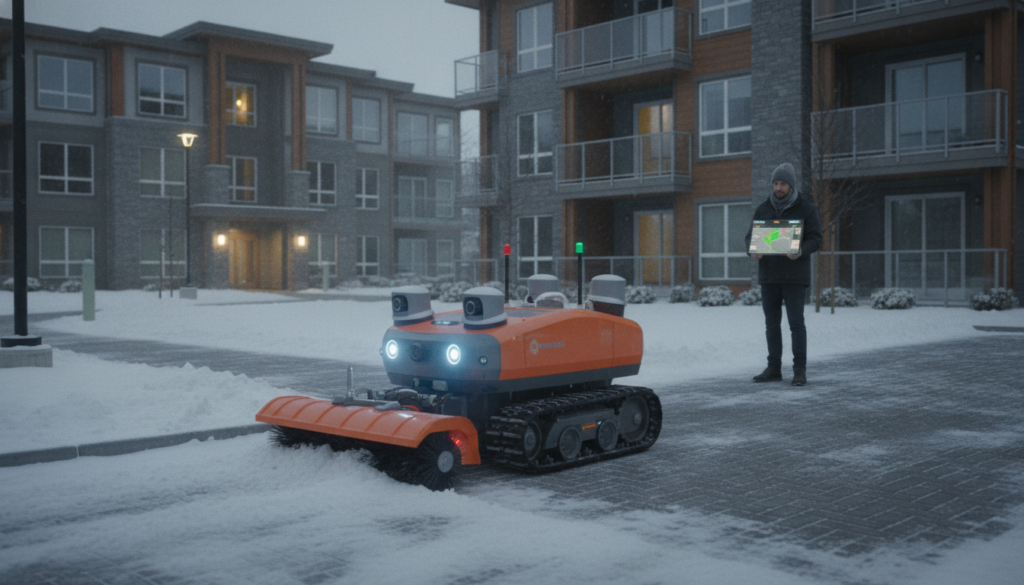

Winter in British Columbia’s Lower Mainland often brings with it the delicate balance of picturesque snowfall and the inherent challenges of maintaining safe, accessible residential properties. For strata communities and multi-unit dwellings in Surrey, these challenges are compounded by complex layouts and high pedestrian traffic. Traditionally, snow removal has been a reactive endeavor, dispatching crews only after significant accumulation or when icy hazards have already materialized. This approach frequently left residents vulnerable to accidents and strata councils exposed to considerable liability. The landscape of winter maintenance is now undergoing a significant transformation, however, as artificial intelligence (AI) is being deployed to usher in a new era of proactive safety and operational efficiency. By leveraging sophisticated predictive analytics, real-time data, and advanced logistical planning, companies are reshaping how snow and ice are managed, ensuring safer environments for everyone long before the first snowflake settles or a patch of black ice forms.
Unveiling AI’s Predictive Power in Winter Management for Surrey Strata
The shift from reactive to proactive snow removal represents a pivotal change for residential communities. Historically, crews waited for snow to accumulate, often applying de-icing agents only after hazardous conditions were already present. This conventional method frequently resulted in costly delays, an increased risk of preventable accidents, and significant liability exposure for property managers and strata councils. The new AI-powered systems employed by companies like Only Strata Snow Removal in Surrey integrate a range of advanced technologies to anticipate winter conditions with remarkable precision. These systems analyze predictive analytics, draw on real-time weather feeds, and utilize ground-level temperature sensors to identify potential icy conditions well before they become visible threats. This capability allows for automated alerts that dispatch crews ahead of time, guaranteeing that essential areas such as walkways, parkades, and shared access points remain safe and navigable.
From Reactive to Proactive: The AI Shift in Winter Safety
The core innovation of AI in snow removal lies in its predictive capabilities. Unlike human observation, which can be limited by visibility and reaction time, AI continuously monitors environmental data to forecast micro-climates within a property. This means identifying areas prone to black ice formation due to shading or elevation, even when ambient temperatures seem mild. For a strata community, this predictive power translates directly into enhanced safety. Instead of responding to a problem, teams can intervene preventatively, applying eco-calibrated de-icing solutions hours before a freeze-thaw cycle could render a sidewalk treacherous. This strategic, anticipatory approach minimizes risk, safeguarding residents and visitors from the dangers of unforeseen winter hazards.
Beyond the Plow: How AI Reinforces Liability Protection for Strata Properties
In addition to preventing accidents, AI-driven snow removal offers a robust defense against liability claims, which can cost communities millions of dollars annually. Every service performed under an AI-backed operational model is meticulously tracked in real time. This comprehensive documentation includes GPS data confirming vehicle locations and routes, photo logs capturing the condition of treated areas, and automated reports detailing service quality, accuracy, and timing. These verifiable records are not merely administrative tools; they serve as critical evidence for strata councils in the event of insurance claims or legal disputes, offering a level of accountability and transparency previously unattainable.
Verifiable Records: A Shield Against Slip-and-Fall Claims
The detailed digital footprint created by AI systems provides an undeniable “proof of service” that holds up under scrutiny. Imagine a scenario where a slip-and-fall incident occurs on a property. With traditional methods, proving that timely and adequate snow removal had been performed could be challenging. However, with AI, strata councils can produce timestamped, geolocated evidence of de-icing applications and plowing, directly linking the service to the specific time and location of the incident. This documentation ensures that communities are not only compliant with safety standards, including those set by WorkSafeBC, but also possess the necessary legal protection to mitigate financial and reputational risks. The ability to demonstrate a proactive and well-documented approach to winter maintenance significantly strengthens a strata’s position.
Real-World Impact: Proactive Safety in Surrey’s Diverse Communities
The benefits of AI in snow removal are particularly evident in the diverse and often complex landscapes of Surrey’s residential communities. From bustling urban strata to quieter suburban multi-unit properties, the unique challenges of narrow laneways, sloped parkade ramps, and pedestrian-heavy zones demand specialized planning and equipment. The AI-supported model excels here, providing solutions tailored to these specific conditions. It ensures faster dispatch times through automated crew alerts, optimizes routing to minimize delays, and performs precise risk prediction, flagging shaded walkways or steep ramps that are most susceptible to black ice. The system also enables pre-dawn servicing of high-traffic areas and proactive salting during unpredictable freeze-thaw cycles, ensuring safety when residents need it most.
Tailored Solutions for Surrey’s Unique Residential Landscapes
A compelling case illustrating this protective capability occurred recently in a Burnaby community. Early one morning, AI alerts identified a steep parkade ramp as a high-risk zone during a freeze-thaw cycle. Reacting promptly, crews were dispatched at 4:30 a.m. to apply de-icing agents, effectively preventing what could have been several slip-and-fall incidents during the morning commute. Such instances highlight how predictive technology directly reduces liability exposure and fosters a safer living environment. Tailored response plans, designed for both self-managed and professionally managed residential communities, ensure that specific needs are met with precision. Considering outdoor property enhancements, such as pergolas and quality hardtop gazebos, often prompts residents to seek year-round usability and safety, which directly benefits from reliable winter maintenance. The AI system’s ability to adapt ensures that every corner of a property is considered, from primary thoroughfares to secluded pedestrian paths.
The Broader Picture: AI, Urban Resilience, and Future Winter Operations
The successful integration of AI technology by companies like Only Strata Snow Removal is not confined to individual properties; it heralds a new era for urban resilience across the broader Metro Vancouver region. The system, initially deployed for Richmond snow removal services, is slated for a full rollout across 26 serviced cities, including Vancouver, Surrey, Abbotsford, and the Tri-Cities, ahead of the 2025–26 winter season. This widespread adoption is supported by the company’s substantial resources, including the province’s largest ATV plow fleet and over 1,000 tonnes of guaranteed salt reserves, ensuring unparalleled capacity to meet demand. This combination of advanced intelligence with robust physical infrastructure establishes a highly reliable winter maintenance model for British Columbia.
Ensuring Resilience: Capacity and Innovation in Winter Maintenance
Beyond local benefits, the challenges addressed by AI-powered snow removal resonate globally. Unpredictable winter weather patterns, escalating liability claims, and the recurring specter of salt shortages are issues faced by many communities, as evidenced by recent shortages in Ontario and British Columbia. When icy conditions go untreated, vulnerable populations—seniors, families with young children, and residents with mobility challenges—are disproportionately affected. The AI-powered approach developed in Metro Vancouver offers a scalable solution. Any community grappling with freeze-thaw cycles and erratic storms stands to benefit from such a system, demonstrating how local innovation can provide a blueprint for broader urban resilience and enhanced public safety in a changing climate.
How does AI predict icy conditions before they appear?
AI systems utilize a combination of predictive analytics, real-time weather feeds from various sources, and ground-level temperature sensors. By continuously analyzing these data points, the AI can forecast micro-climates and identify specific areas on a property prone to ice formation, even when general weather forecasts might seem mild.
What kind of documentation does an AI-backed system provide for strata councils?
An AI-backed system generates comprehensive, verifiable documentation for every service performed. This typically includes GPS data confirming the precise location and route of snow removal vehicles, time-stamped photo logs of treated areas, and automated reports detailing service quality, accuracy, and timing. These records are invaluable for liability protection.
How does AI improve efficiency in snow removal operations?
AI optimizes efficiency through automated crew alerts, which ensure rapid dispatch when conditions change or risks are identified. It also enables optimized routing for snow removal vehicles, reducing travel time and operational costs. Furthermore, its predictive capabilities allow for proactive servicing, preventing the need for more extensive and costly reactive measures later.
Is this AI technology only for large strata properties?
While effective for large properties, the AI-supported model is designed to address the unique challenges of all strata and multi-unit housing, regardless of size. It accounts for specific features like narrow laneways, sloped parkade ramps, and high-pedestrian zones, adapting its plans to provide tailored and effective solutions for diverse residential landscapes.

